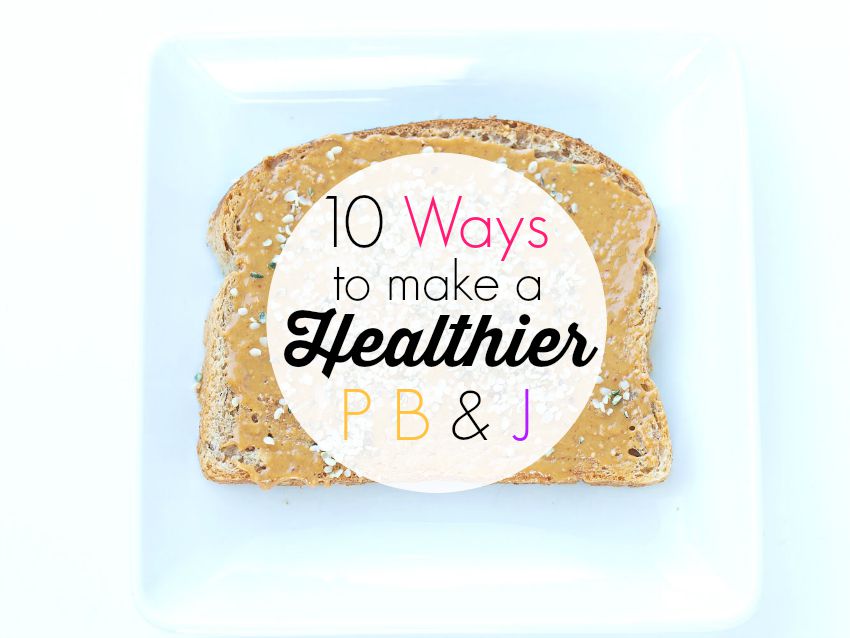
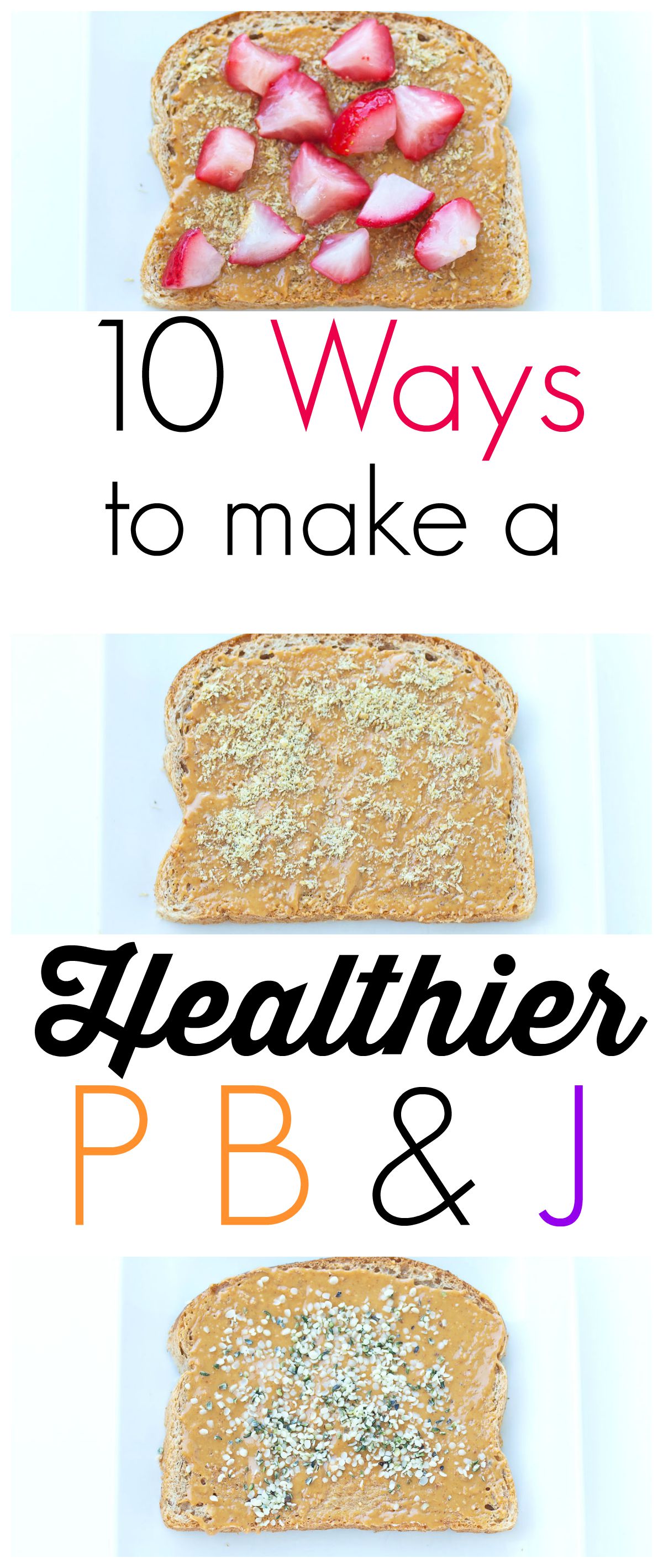
10 Ways to Make a Peanut Butter and Jelly Sandwich Healthier
It’s time to start thinking about school lunches again. Do you have a peanut butter and jelly kid? I have one of each. A peanut butter and jelly kid who would eat the beloved sandwich at every meal, every day, if I let her and one kid who can take ’em or leave ’em.
It turns out they both have their pros and cons. The peanut butter and jelly kid leaves me with an easy option. It’s quick and easy to make a PB&J and while it’s not the healthiest thing in the world, it could be a lot worse. The take ’em or leave ’em kid makes life a bit more tricky, yet it’s easier to get a larger variety of foods into him.
Meghan, my oldest, is my PB&J kid. She would love it if I packed the sandwich in her lunch every single day. For the sake of variety, I do not, but she does get one in her lunch box a lot. Probably more than she should, but remember what I said about the easy part? Yeah, sometimes convenience wins.
How healthy a peanut butter and jelly sandwich is really depends on the ingredients you use. I figure if my child is going to be eating this sandwich often, I better make it as healthy as I can. Some of the things on this list I’ve been doing since the beginning, and a few of them I’ve been experimenting with lately to see how many ways I can squeeze more nutrients into this lunch staple.
1. Use the best bread you can.
The best way to start is with a high quality, whole grain bread. Of course, homemade sandwich bread is top notch because you control the ingredients and you know there aren’t going to be any preservatives. I know that just isn’t every person’s reality, though. It’s not my consistent reality, unfortunately. (Maybe someday? I’ve been saying that for years.) The next best thing is bread baked fresh from a bakery or your grocery store’s bakery section with solid ingredients. Our local grocery store bakes fresh, whole grain bread with organic ingredients. It’s hella expensive, but they do have a point system that allows you to get it cheaper. I save my points to buy this bread, usually every other week. The next best is a store bought, whole grain bread option without ingredients like high fructose corn syrup, partially hydrogenated oils, and azodicarbonamide. My top pick is Food for Life Ezekiel Bread, but unfortunately my daughter doesn’t care for it as a sandwich bread. Dave’s Killer Bread is another good choice if you can find it in your area.
2. Use organic, natural peanut butter.
Peanut crops are highly sprayed with pesticides. Why does this matter? This is straight from the EPA’s website: Adverse effects of pesticide exposure range from mild symptoms of dizziness and nausea to serious, long-term neurological, developmental and reproductive disorders. Simply put, this is not a risk I’m willing to take with my children. Pesticide exposure is at an all-time high with our children, and we don’t know exactly how far-reaching and devastating the results are going to be. If you can afford it, organic peanut butter is the way to go. You also want peanut butter without added oils or sugar. Just peanuts or peanuts and salt should be the only ingredients. (Even if you can’t get organic, getting natural is super important as well, so look for peanut butter with just one or two ingredients.) My favorite organic peanut butter is Smucker’s Organic, which I get at Target for around $4.50 a jar.
3. Use organic, low sugar jam.
I know it’s called “peanut butter and jelly”, but in most cases, jam is a better option. Jams are made with the whole fruit crushed, while jelly is made from only the juice of the fruit. Organic is best for the same reasons that I recommend organic peanut butter. Berries and grapes, the most often used fruits for jams and jellies, are some of the highest in pesticides. I’ll admit, it can be very difficult to find a jam that is both organic and low sugar. I used to buy St. Dalfour jam a lot because it is made with no added sugar and it was the only brand that I could find that didn’t have sugar on the label. But it isn’t organic. I guess sometimes you need to pick your poison. The Kirkland brand Organic Strawberry jam at Costco does have added sugar, but it’s lower in sugar than most jams out there. For even better options, see the next three ideas on the list.
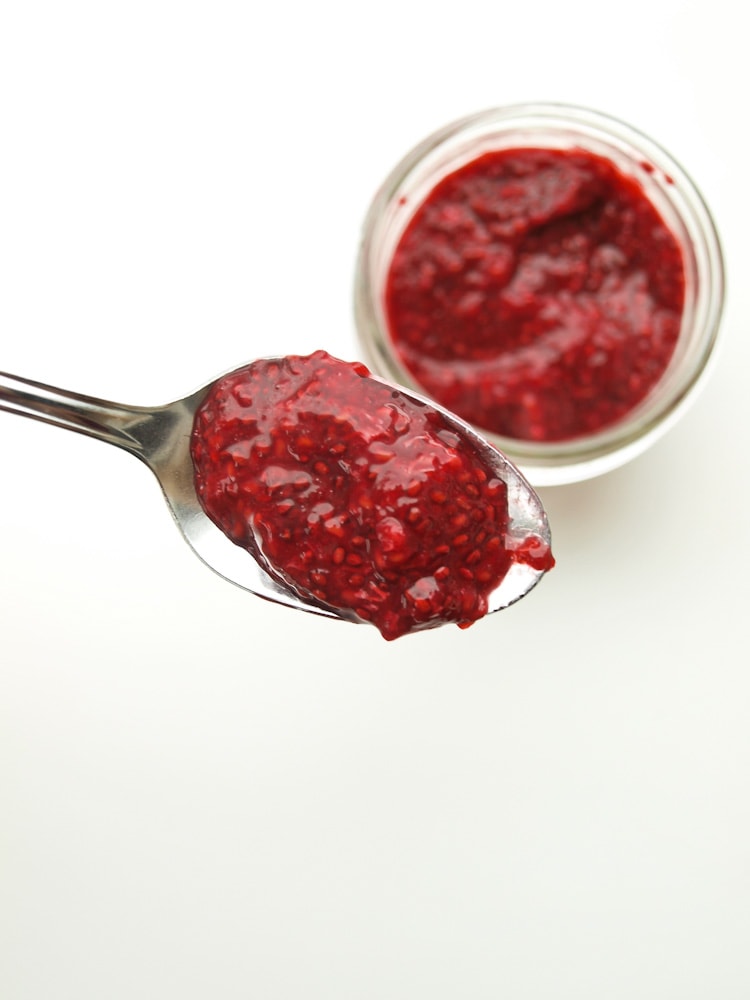
4. Make your own chia seed jam.
I make my own chia seed jam as often as I can. Lightly sweetened with raw honey and nutritionally enriched from the chia seeds, this jam is your healthiest option. The best part is that it only takes five minutes and a few simple ingredients to whip it up.
5. Use raw honey instead of jelly or jam.
“Raw honey is an alkaline-forming food that contains natural vitamins, enzymes, powerful antioxidants and other important natural nutrients” (Source) The bonus is that peanut butter and honey taste incredible together. You obviously don’t want to add too much honey as it’s still sugar, but it’s a great natural alternative to store-bought jelly.
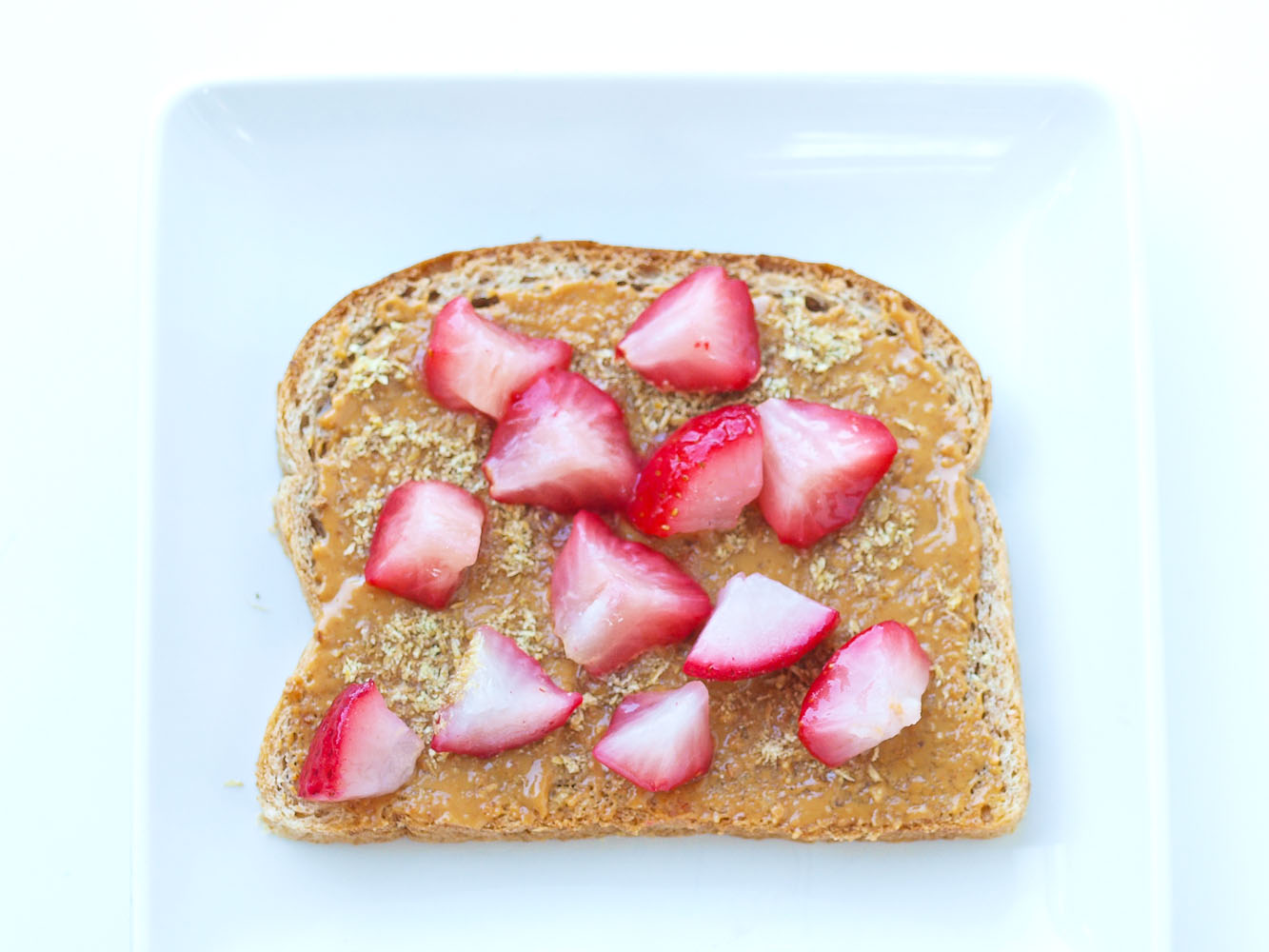
6. Use fresh fruit instead of jelly or jam.
One day, I realized I was out of jam when I was half way through making a PB&J. I did have some strawberries, so I finely diced them and used them in place of the jam. Meghan was happy to eat her PB&J this way! Peanut butter and sliced bananas is also a classic combination I grew up loving.
7. Use a different nut or seed butter.
How much you can get away with here will depend on your child. Meghan doesn’t like sunflower seed butter, so I can’t make her PB&J with that. Luke, however, does like it, so I make his with it for a change. Both of my kids like almond butter so I switch up the peanut butter and use almond butter sometimes. Variety is such an important part of children’s diets, so this little change can really help your child get some different nutrients he might not normally get. I’ve been experimenting with making different nut and seed butters in my food processor, which helps with the cost.
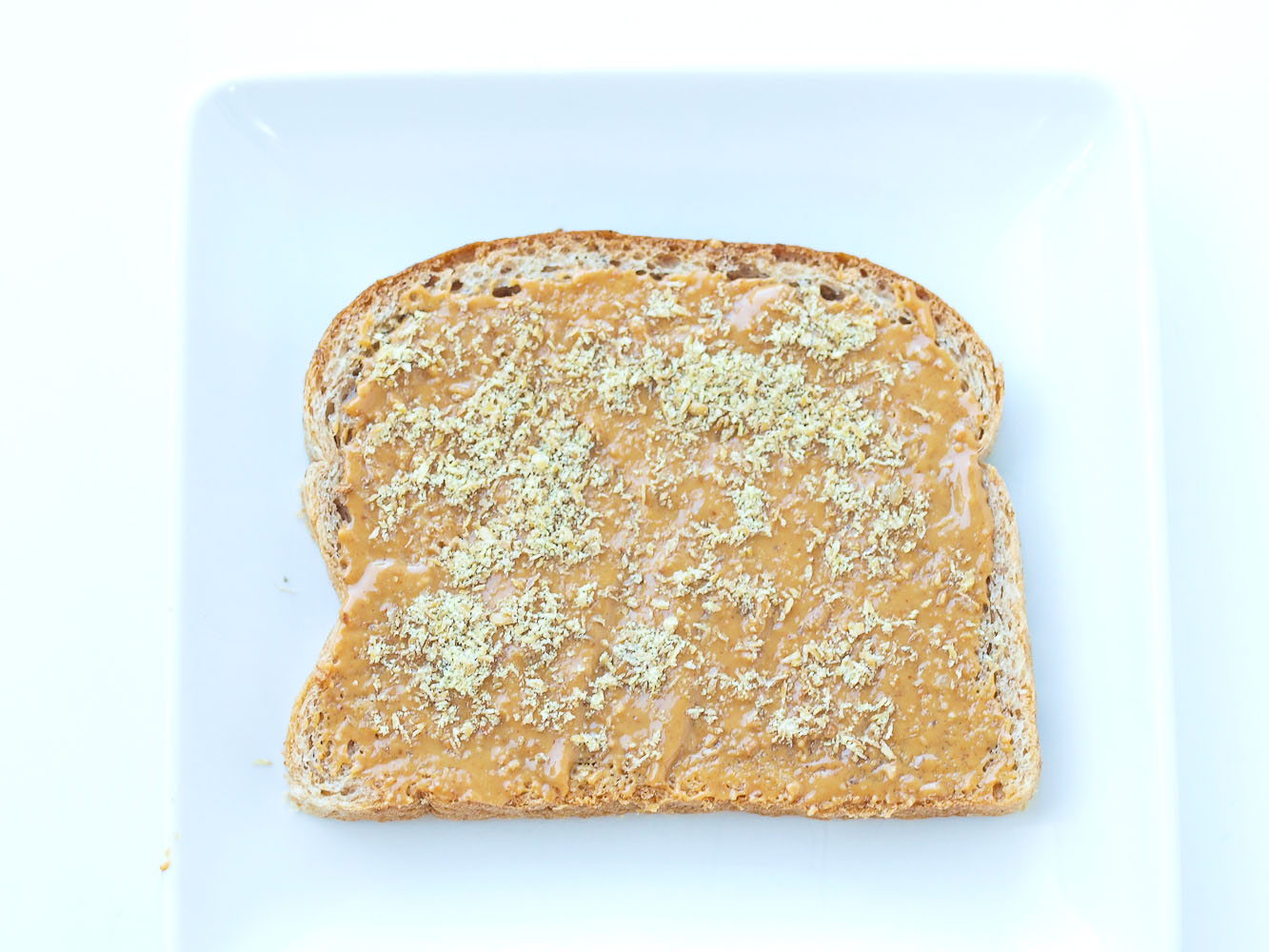
8. Add ground flaxseed meal.
By sprinkling a little flaxseed on the sandwich, you are adding protein, fiber, manganese, vitamin B1, and omega-3 fatty acids (ALA). It just gives the sandwich a little boost of nutrition, and Meghan never even suspects that it’s there.
9. Cut your jam with a little plain Greek yogurt.
I know this sounds weird, but it’s actually pretty good. It boosts the protein of the sandwich and forces you to use less jam, which means less overall sugar. That’s a win! You can use equal parts yogurt and jam.
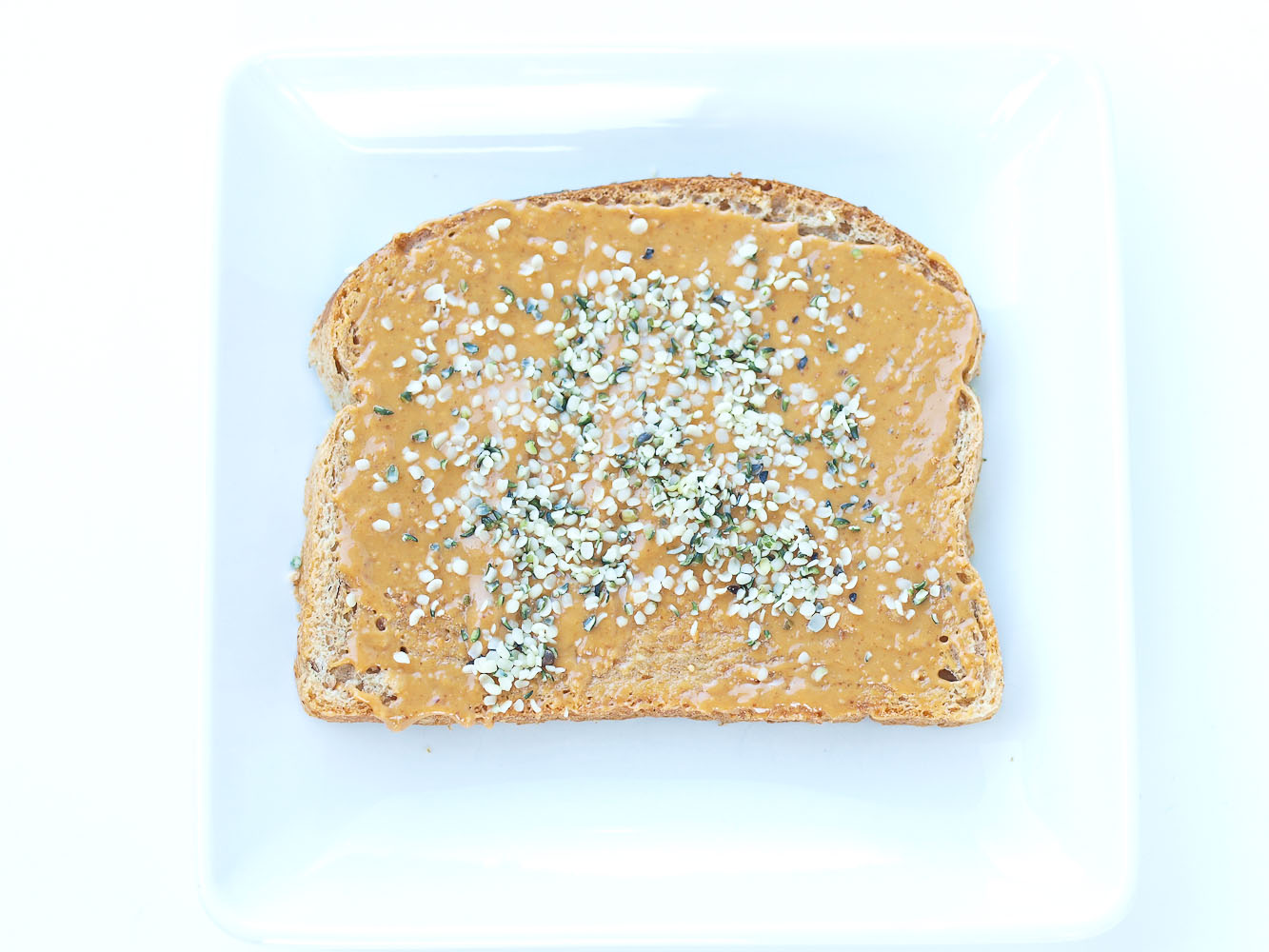
10. Add some hemp seeds.
Just like the flaxseed meal, my kids don’t notice when I sprinkle these little guys on their PB&J. When you add hemp seeds to the sandwich, you are adding iron, fiber, antioxidants, zinc, complete protein, and a perfect balance of omega 3 and omega 6 fatty acids. A nice little boost!
Don’t be afraid to try one than one of these ideas at a time. Using these little tips, you can build a healthy peanut butter and jelly that you won’t mind if your kids ask for everyday! Are there any tips you’d add to this list?
Original article and pictures take happyhealthymama.com site
My kids have been sick a lot these last couple months. Just when one runny nose or cough is finally winding down, the next one shows up. It’s so draining and discouraging – for all of us!
So recently, I asked a group of parents for help. A few of these people are health experts (a Chinese medicine doctor, an acupuncturist, a pediatrician, a dietitian), but most are just loving parents who’ve done some trial and error to see what works best for their young kids.
Below is a list of products or habits that were mentioned many times by this group as boosting kids’ immunity – meaning their kids get sick less often, and when they do get sick the symptoms seem less severe and don’t last as long. Some of these are rooted in extensive scientific research, some aren’t. But since I don’t think any of the following practices can hurt (when given according to the directions), I wanted to share these with you.
10 Habits To Keep Your Kids Healthy This Winter
Wash hands frequently with warm water and plant-based soap. This is the most obvious habit of all, but it’s worth mentioning because washing your hands with soap and water is WAY more effective than using hand sanitizer. Skip the antibacterial soap and opt for something gentle yet effective, like Branch Basics, Seventh Generation or Honest Company.
Stick to an early bedtime. The one thing that’s proven to lessen the frequency of colds is getting enough sleep. Kids have to go to bed early to have any chance of fighting off viruses, so develop a family routine that allows for this. (How early depends on age/nap times, but for young kids early means no later than 8pm).
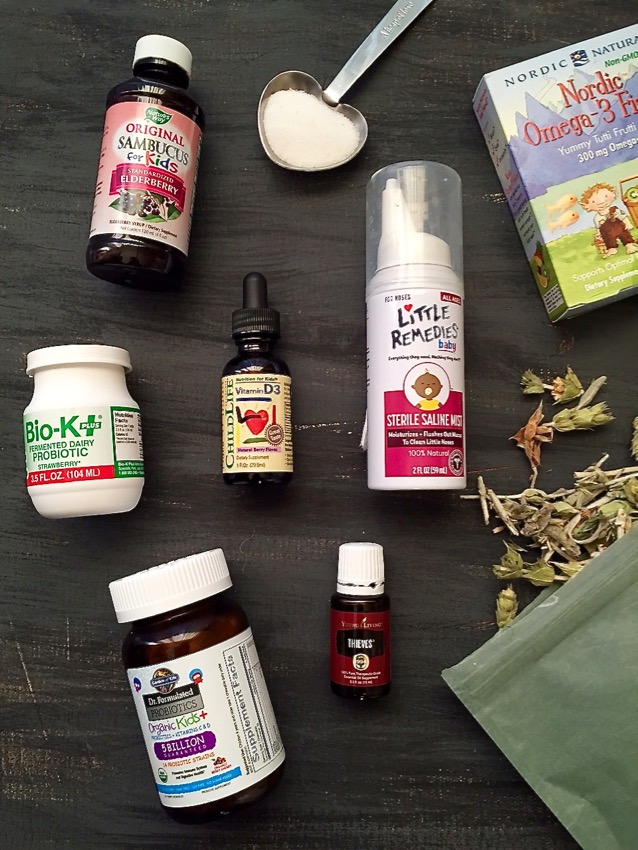
Give a daily probiotic. I love Bio-K because it has 50 billion cultures per serving (kids take 1/4 of a bottle per day, so about 12 billion) and tastes like strawberry yogurt, so kids like it. I recently bought Garden of Life Organic Kids+ probiotic, which includes Vitamins C & D too, so I’ll probably alternate between these two products.
Give fish oil daily. I’m not really a supplement person, but fish oil has been extensively studied and is the one supplement I’d recommend for nearly anyone, since it’s hard to get enough omega-3 fatty acids in a regular diet, even if you’re good about eating plenty of fish, avocados, walnuts, flaxseed etc. I like Nordic Naturals best.
Give Vitamin D daily during winter months. Vitamin D is the one “antioxidant” that’s backed by research as maybe helping to prevent colds or lessen their severity. Vitamin C gets all the hype but it’s Vitamin D we need to be talking about, especially during winter months when the sun isn’t as strong.
Rinse nostrils with saline spray. When you see a cold coming on, spray a couple pumps of saline in their noses (make sure you have a separate bottle for each kid so they don’t share germs) during bath time, which will help rinse out the virus. Saline spray can also help when there’s heavy congestion in the nose – just have them blow or use the Nose Frieda after you spray.
Offer warm tea with honey and lemon. My favorite is Klio, because it tastes mild enough for kids and it’s immune-boosting powers are backed by science. I notice that when I give Lucy Klio with lemon and honey it dries her up a little, so it’s great before bedtime.
Use Thieves Oil when a cold is coming on. I’m not knowledgable about essential oils, but many parents feel that applying Thieves oil (mixed with a carrier oil) on their children’s bodies or diffusing it in their room in an essential oil humidifier really helps fight off colds.
Steam up the bathroom before bath time. I normally work hard to conserve water, but when we have colds I let the shower run for a few minutes before bath time, so the bathroom is warm and steamy when they hop in. We stay in there at least 20 minutes (that’s where I do the saline nose spray) – because nothing beats warm steam when you have a stuffy nose.
Limit sugar. The research on this is spotty, but sugar and refined carbohydrates have been shown to increase inflammation in the body, and more inflammation is associated with poorer health. So whenever my kids seem to be coming down with something, I am careful to avoid excess sweets.
I’ve recently stocked up on products and created some new routines in the hopes that we get sick less often over the remainder of cold and flu season. I’ll let you know how it goes!
In the meantime, please leave a comment if you have any other habits you swear by!
Original article and pictures take eating-made-easy.com site
A lot of people wonder how to detox from vaccines — which may be triggered if they’ve experienced a bad reaction to a vaccine. (In case you’re not familiar — here are 10 signs of a vaccine reaction.) That’s why we’re sharing some important ways to detox from those vaccines today. And, if you’re not sure why it matters, check out all our vaccine education posts to learn more.
Many will tell you that vaccines save lives and without them, the world would be a terrible, disease-ridden place. If you’ve come to the realization that science says differently, but have been vaccinated or allowed your children to be vaccinated, there are ways to detox the body from vaccines.
Why Do We Need to Detox?
Vaccines contain more toxins than the majority of the population realizes. Formaldehyde, antibiotics not approved by the FDA, mercury and other heavy metals, as well as the bacteria or virus of the vaccine and its preservatives. If you feel like you need more information and unbiased research on vaccines, we have boatloads of information to help you come to a decision. Making a healthy decision for your child is one of your top priorities as a parent.
Reactions look differently for everyone depending on your body’s current immune system and health status, as well as your genetics. You may have a rash, fever, or just feel ill, or possibly develop an autoimmune disease. Review the vaccine’s package insert to see its ingredients and side effects. Look at the VAERS database to see reported adverse side effects, and even see if a batch number you took had similar reactions.
These reactions are a good sign that you need to detox from vaccines.
Who Should Detox?
If you’ve ever received a vaccine or taken a harmful pharmaceutical, you can detox. The good news is that detoxes can be gentle and typically produce few side effects during the detox, and improved health once the detox is complete. It’s important to detox from vaccines if at all possible.
Healthy adults and children over age 4 (the immune system is fully developed around the ages of 3-4) are the ideal candidates for a detox, but of course you may be living with chronic or acute illness from the vaccines. It’s best to start slow and set aside time from work and life to complete a detox. Children can also be detoxed, but it must be taken with great care, and under the supervision of a trusted physician when possible.
If you are pregnant or nursing, taking prescriptions, under a doctor’s supervision, or being treated for illness, do not detox.
There are numerous labs which you can take which will show the heavy metals present in the body from vaccines. Both hair follicle and blood testing is available.
It is normal to feel ill the first few days when you detox from vaccines, or a few days into the detox, if you do not normally eat whole foods and have never detoxed, this is called a “healing crisis.” As many toxins leave your body, you may feel nauseous, tired, or have digestive issues. When you detox, be sure to rest as much as possible, and drink at least 8 cups of water per day, if not more when possible.
If you become extremely ill, or cannot keep down food or water, or have diarrhea for over 24 hours, please discontinue the detox and contact your physician immediately. Always talk with a trusted physician before beginning a detox or new supplement regimen, or if you have prescriptions.
10 Ways To Detox From Vaccines
#1) Detox Baths
Epsom salt, bentonite clay, and essential oil baths can all pull toxins out of the skin, your body’s largest immune organ.
Start with a warm bath of 1/4 cup of epsom salts 2-3 times per week. You can also add a few drops (2-3) of lavender or coriander essential oils and 1/8 cup of bentonite clay for added detoxification.
#2) Get Sweating!
Sweating is another great way to rid the body of toxins. Running, jumping jacks, rebounding (see below), or even going into a sauna (be cautious with young children) are good ways to sweat the toxins out of the body, that are trapped in the lymphatic system. If you do not have a sauna near you, you can purchase a simple body sauna online. Sweating is a great way to detox from vaccines.
Start slow, with 5-10 minutes a day twice a week at a low heat. If you do not sweat, your body is not ready to detox. Gradually add time (up to 15-20 minutes) and heat. Do not use a sauna at a high heat for more than three times per week. Always use a sauna under supervision.
#3) Cilantro and Chlorella Juices or in Raw Form
Cilantro has been shown to bind to heavy metals and pull them out of the body. This is a very effective way to detox from vaccines. You can purchase cilantro and chlorella tinctures, but the raw plant in foods or juiced is best. Silica is another mineral which has been shown to remove aluminum in the body, a grave concern for vaccines. Choose a natural (horse tail) silica supplement.
Juice 1/3 bunch of cilantro and add to another juice (pineapple or orange) at least three times per week. If used for an older child or adult, you can put raw cilantro in foods.
Chelation therapy uses high doses of detoxing mediums intravenously to pull the toxins out of the body. This must be done under the supervision of a knowledgeable physician and tailored to the patient. High dosevitamin C therapy also revs up the immune system and allows it to dispel the held up toxins. This is also available intravenously, and has been shown to quickly cure many illnesses, such as whooping cough and aid in wound healing.
Find a knowledgeable physician who offers chelation or vitamin C therapy.
#5) Homeopathic Methods of Detox
A licensed naturopath can determine a homeopathic regimen or series of homeopathic remedies to detox from specific toxins based on lab results.
Talk with your naturopath and consider lab heavy metal and other toxin testing to find exactly which homeopathic remedies may help you or your child detox.
As you detox, you need to be sure that your immune system is able to fight off all the latent bacteria and viruses which are flushing through the body. Elderberry is one of the best antivirals, and paired with the antibacterial properties of raw local honey, makes it a virus and bacteria double hitter. Children love the taste of elderberry syrup, and it can be added to a favorite juice or smoothie.
Probiotics, prebiotics, and fermented foods with good bacteria will boost your gut health and allow your child’s system to properly regulate toxins and other misplaced bacteria, viruses and fungus. Numerous studies are coming out to show that those with autism also have serious intestinal damage, could there be a correlation? You bet.
Purchase a probiotic, prebiotics, and fermented foods and add them to your or your child’s normal diet.
#8) Digestive Organ Detox and Reboot
When detoxing, your digestive organs take the brunt of the clean up. Your liver, in particular, pulls out and determines what is and is not a toxin, and what good vitamins and minerals your body should absorb. We need to be certain that the liver is in top shape to properly detox. We do not want to pull the toxins out of other tissues and organs in the body only to be blocked from releasing from the liver (now we have a sick liver!). It’s wise to be sure you are keeping the liver clean before, during and after your detox from vaccines.
If your little one doesn’t like the bitter taste of dandelion root, try milk thistle tea. Consume a cup 1-3 times per week.
#9) Massage, Dry Brushing, and Rebounding
Your lymphatic organs and fluids push your immune cells and fluids around your body to attack any invaders and keep things moving smoothly. Unfortunately, there is no pump for these fluids like there is for the blood system (your heart!). This leaves it up to you to move the fluids from the lower to the upper organs (thanks, gravity!). Massage, dry brushing your skin, and rebounding are three of the best ways to get those fluids moving and allow those organs to complete their detoxing process.
Find a rebounder (or find a small trampoline at a local garage sale) and try to jump for at least 1-3 minutes 3-4 days per week.
#10) Water!
Your body cannot flush out toxins if you’re dehydrated. Be sure the person being detoxed has at a minimum 8 cups of filtered or alkaline water daily. Fiji water is great to have while detoxing because its silica content is high, and will aid in detoxing heavy metals.
Drink 8 cups of filtered or alkaline water daily at least during a detox.
We’ve all made decisions we wish we could change. Do not feel bad about choices you made when you had less information. Instead, move forward with this knowledge and work to reverse the damage. Many, many people have seen their children recover fully from serious vaccine damage, including autism.
Have you had to detox from vaccines? What worked best for you?
Original article and pictures take www.modernalternativehealth.com site
“Oh the weather outside is frightful, but the fire (and hygge!) is so delightful.”
Winter has settled in and taken up residence for those of us in the northern hemisphere. White Christmas was fine and dandy a month ago. Now you find yourself dreaming of spring. Even for those who don’t experience snow (like me), the rain and cold can be tiring.
There’s an answer to your mid-winter blues, it’s a beautiful thing called hygge.
Hygge, pronounced, “hoo-ga” (or more accurately: make the “ee” sound but with your mouth in the “oh” position for the “y” part of the word), is a Danish word roughly described as coziness, though it is said that there is no way to properly translate the word. It is thought to be more of a feeling, or an atmosphere, than a simple trait.
And, in case you haven’t already seen it around – it’s been a “buzz word” for the past year or so. And for good reason.
Hygee is beautiful. It is a gift in the “bleak mid-winter” that encourages you to embrace the season you are in and not be longing for the next.
“Hygge was never meant to be translated. It was meant to be felt.” – ToveMaren Stakkestad
Do you love to wrap your hands around a steaming cuppa? That’s hygge. How about curling up by the fire with a warm blanket and a favourite book? Again, hygge.
Enjoying a big bowl of soup while chatting with a few friends? Yes and yes, those are hygee too. Especially the friends-coming-together part.
Hello hygge, where have you been all of my life?
There is something deep inside all of us that resonates with the concept of hygge. It’s the feeling that I have been longing for and trying to embrace for most of my life.
Crafting your home to be a haven is a big part of hygge. Adopting simple ways of decorating, traditions, and the foods you lovingly prepare help bring about that coziness and sense of belonging that you long for.
To make things a bit easier for you (and me), here is a list of 10 ways to create hygge this winter in your own home.
10 Ways to Create Hygge this Winter
1. Candles
Candles cast the perfect glow about a room; just looking at one makes me feel cozy and at peace. They have a soothing effect that most sources of artificial light don’t provide.
It connects you with an older time and traditions long gone by where people only had candle light to get them through the long hours of darkness in the winter months.
Beeswax candles have always been my preferred go-to candle with soy wax ones being a second (and more economical) choice. They smell heavenly as they burn, filling the room with a light honey fragrance.
2. Yellow Lights
In a day and age where LED and fluorescent lights are widely popular, sometimes it is nice to go the path less taken and embrace the standard “old fashioned” yellow light bulbs.
Yellow lights, like candles, let off a much softer glow that feels more soothing and is gentler on the eyes. The yellow glow just feels cozier.
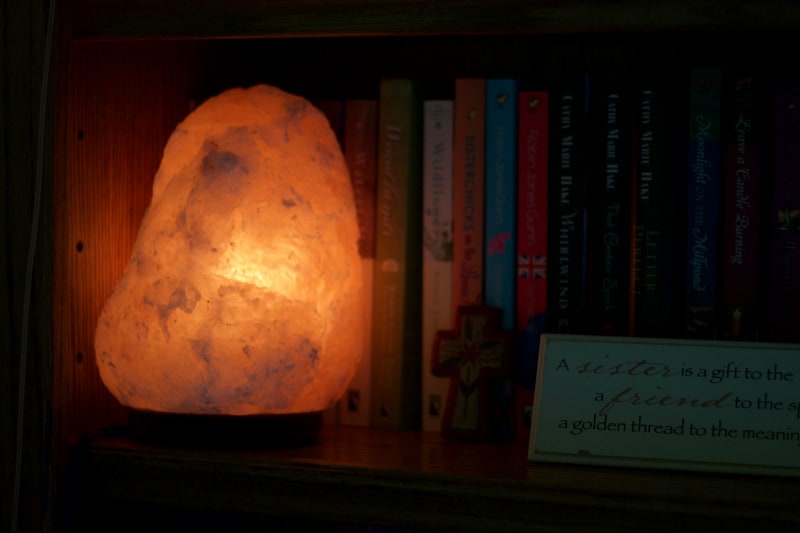
If you are looking for other soft light sources, consider investing in a couple of Himalayan salt lamps for your home.
3. Hot Beverages
Is there anything better than wrapping your hands around a mug of coffee, tea, or hot cocoa? I love them all and generally enjoy all three on any given day in the colder months. They can be as simple as a mug of honey-sweetened hot chocolate or on the fancier side with a Bowl of Soul (chamomile latte).
If those aren’t enough, try any of these 50 hot drink recipes that will warm you up on a cold day!
4. Soups
Soup is the ultimate winter food. It’s soothing to both body and soul. Favourites like loaded baked potato soup and Irish beef stew that are hearty and filling are perfect this time of year.
More Soups to Savor:
5. Cozy Socks
Are socks really that important? Oh yes, yes they are. Socks are not just mandatory pieces of clothing that you pull over your feet so you can get out the door.
There are fuzzy socks, wool socks, toe socks (have those ever been okay?), knee socks, argyle socks… you get the picture. Socks warm your feet and allow you to express a bit of your personality.
Who wants cold feet? There is nothing hygge about that.
6. Warm Blankets
In my world, the perfect bed has a down comforter on top. It’s the type of blanket that makes it hard to get up in the morning and invites you to settle in with a good book before going to bed.
Soft blankets are a must to have around the house in the winter. I like to have a basket of blankets where everyone can pull one out and cover up while talking, reading, or watching a movie.
I also tend to keep one on a chair to settle down with when I take a break.
7. Good Books
Good books are like best friends, they are the ones that you can visit again and again and never grow tired of them.
New books are exciting to read but this is the time of year to pull out your cherished favourites.
Books to consider:
Little Women
Pride and Prejudice (or anything else Jane Austen)
Winter is a time to celebrate family and friends. Despite the cold, winter brings people together.
You don’t have to wait for a holiday to invite people into your home. Have people over for soup and board games. Or invite a friend over for tea and cookies. Introverts and extroverts alike can experience hygge by enjoying time with others in the coziness of a warm home.
9. Have Intentional Down Time
Introverts unite! In your own homes…
Winter was been made for introverts. It is socially acceptable to not leave your home as often when the weather is not the finest. This INFP is thrilled at that reminder!
Hygge is about self-care too. It’s important to take time for yourself and your immediate family, especially after hosting people. Try to intentionally carve out a few minutes each day to slow down and rest.
That might look like reading a book with your kids or hiding in your bathroom with a piece of dark chocolate. Maybe a warm bath, or just a good ol’ power nap.
10. Movie Night
While the weather is raging outside what’s better than watching a movie curled up alongside your loved ones wrapped up in a blanket? You might as well put on a pair of warm socks and drink a cup of hot cocoa and make it extra hyggelit.
Are these 10 ways to create hygge this winter not enough? Be sure to read 28 reasons not to hate winter – many of the items on the list are related to hygge!
How are you creating hygge in your home this winter?
Original article and pictures take redandhoney.com site
I’ve been using it on and off for over two years now. I know that I feel better when I use it consistently. And, it is kind of fun sometimes. (Really.)
First, that stuff you can find at the store is not healthy gelatin. There is the ” gelatin desserts” that are full of artificial colors, flavors, and possibly sweeteners (or sugar). But there is also plain gelatin in little packets you can buy, and that’s not so good either.
That gelatin is processed at high temperatures. Gelatin naturally contains glutamic acid (an amino acid), but when processed with high heat, it turns to MSG. That is not good for you at all. Plus, gelatin is made from the bones and connective tissue of cows. Most cows are raised in CAFOs (Concentrated Animal Feeding Operation) and are fed regular antibiotics, bakery waste, GMO corn and soy, and a bunch of other garbage. (Literally — see this confession from a former CAFO farmer.)
At any rate, it’s not a health food when it’s from unhealthy cows and heavily processed.
But! Never fear. Gelatin from grass-fed cows, processed at lower temperatures, actually has quite a number of health benefits. These include:
Gut health (soothes irritated guts, helps to heal and seal leaky gut)
Skin (improves collagen production, making skin look younger)
Hair (grows hair stronger, shinier, healthier)
Nails (stronger, healthier nails)
Muscles (includes amino acids we rarely get otherwise, which help build strong muscles)
Anyway, this is some pretty awesome stuff. I include it in my diet in the form of homemade bone broth, but also add extra as a supplement. I notice a difference when I do this. There are actually several different ways to get your gelatin in — many kid-friendly!
Check out the homemade “jello!”
10 Uses for Grass-Fed Gelatin
This is my favorite and most common use! I mix some type of juice (usually grape or cranberry) with about 2 tbsp. gelatin, add hot water, then add my supplements to it. I try to do this immediately after waking up — and after my oil pulling routine. Here’s a recipe.
Seriously, who doesn’t love fruit snacks? My kids constantly beg for them at the store. They know exactly which ones use the natural food dyes and such, which I have bought in the past. But right now we’re trying to stay away from sugar, so even the “natural” ones won’t work. Instead, we make our own! It’s simple — 1/2 c. juice + 5 tsp. gelatin. (Use half the juice cold, stirred into the gelatin, then heat the other half the juice and add it once the gelatin is absorbed.) I have a cute little heart mold we use. At least when my 6-month-old isn’t playing with it — turns out silicone is great for teething.
4. Post-workout drink
Want to help build your muscles? Gelatin is great as a protein powder post-workout. It’s not a complete protein, but it includes the amino acids that aren’t found in meat and that we rarely get. Add collagen peptides (which don’t gel) to any liquid, or throw 2 – 3 tbsp. in a blender with 1/2 c. nut butter, 2 tbsp. cocoa powder, 1 c. milk or coconut milk, and ice.
5. Anti-stress drink
Gelatin is a really great way to reduce stress. A little stirred into your drink can help make you feel better. Try adding collagen peptides to ginger lemonade, and use a little magnesium lotion (on your skin, not in your drink) for real anti-stress help!
**Try using either the blue or green cans from Vital Proteins for all of these recipes. I happen to prefer the green, which is a true gelatin. Blue is the collagen peptides, which is basically gelatin that is broken down so it doesn’t gel anymore. It’s supposed to be easier to digest. I just like the texture and versatility of the gelatin. The peptides will work in ideas 1, 4, 5, 6, 7, and 10. You’ll need a true gelatin for ideas 2, 3, 8, and 9. Vital Proteins is grass-fed and high quality!**
6. Stomach soother
Gelatin is very gentle on your stomach, so it’s a great thing to drink when your stomach is upset. Stir it into some ginger tea or diluted juice — you don’t want too much sugar if you aren’t feeling well.
7. Allergy fighter
Gelatin is also anti-inflammatory! Because of this, and because it addresses poor gut health, it can help ease allergy symptoms. Drink this daily with turmeric and nettles and raw honey — all great for allergies!
8. Baking recipes (gluten-free)
Believe it or not, I’ve recently learned that you can use gelatin in gluten-free baking! For example, in this recipe for bread, or this gluten-free pie crust. I plan to try several more gluten-free recipes using gelatin! It sounds like an awesome substitute for eggs and gluten as it lends structure to the recipes. Pretty neat to have a safe, whole-food substitute.
9. Marshmallows
Okay, this one is just fun. It’s not remotely healthy! But a good amount of honey or sugar that’s cooked and beaten with gelatin makes marshmallows. They are delicious, way better than store-bought. And for those of us with allergies, they are corn-free.
10. Anti-inflammatory soups
Sometimes, you need a little “extra” in your soup. Real bone broth has natural gelatin in it, but adding a little more is sometimes good, especially if you are sick or have been around sick people! Add a tbsp. or two to a pot of soup — just be sure to add it to cold water first, then once it has absorbed, add to the pot and stir well. (Or a little hot soup to a cup of gelatin and cold water, then pour it back into the pot.)
Choose Quality Gelatin
As I mentioned above, choosing quality gelatin matters. One of the best ones is Vital Proteins. They offer collagen peptides, which dissolve in any liquid (also great to throw in smoothies, milkshakes, etc.) and actual gelatin (which dissolves only in hot liquids). Peptides don’t actually gel, but gelatin does. I personally like gelatin better! But many prefer peptides because they are easier to use.
These cans will last a long time. With daily use, we’re talking 2 – 3 months at least. I often forget to do it everyday, so it might even be more like 4+ for me. Oops. It’s one of my more frugal supplements, honestly. But it does make a big difference.
Actually, some of the key amino acids in gelatin, which are hard to find in other foods, help promote the formation of GABA in your body, which can fight depression and anxiety. Good reason for me to keep taking it! (And maybe for you too.)
Anyway, lots of awesome uses for gelatin. And it’s delicious. ��
What are your favorite uses for grass-fed gelatin?
Original article and pictures take modernalternativehealth.com site
One of the most frustrating experiences as a parent is to have a picky eater. You have to use a velvet hammer approach while getting to the root cause of the problem. Here are 10 tips to help your picky eater.
As the parent, you don’t want to force your child to eat things that you know their growing bodies need, but you also don’t want to enable them to continue with their strict limitations.
Children have many reasons for avoiding certain foods – there may be color issues, texture issues and of course taste issues. I’ve known children that would only eat white foods (mainly refined carbohydrates like pasta and white bread) and other children that would not eat anything green – others that would refuse to try anything new.
While most children will not starve themselves, this is an indication that something is going on in their gut. When my son was 18 months all he would eat was pasta, cereal, crackers and some fruit. I had to put my foot down when a blood test showed his triglycerides were over 300!
The pediatrician told me he was eating too much fat. Can you imagine? I knew he was not eating much fat at all and it hit me straight on, that it was all the carbs he was eating. I had to put my foot down and I started offering proteins such as chicken and hamburger, etc. He refused to eat it until he got hungry enough – about two days. I told him there was no more pasta or cereal and he had to eat what we had.
Looking back, I wish I had known more about the microbiome, dysbiosis and how to nurture a healthy gut, because a picky eater is a flag that something is wrong in the balance of gut bacteria.
You might consider following the GAPS diet for a while in order to rebalance gut bacteria.
We Eat to Feed Trillions
That’s right.
We eat to feed the trillions of gut bacteria that inhabit our intestines. When the balance is off, cravings for certain foods take hold and picky eating can develop. As an adult you have experienced cravings too, right?
That is your gut bacteria (and yeasts) that create those cravings because that is the food they survive on. Mainly they are sugar cravings because this is what pathogenic bacteria love to feast on! This can be changed with a targeted strategy.
10 Tips to Help Your Picky Eater
1- Start healthy real foods early.
Great tasting fresh vegetables and fruits are early foods for baby and help them develop a taste for real food. Some folks following the ideas behind baby led weaning in order to encourage babies to eat all foods.
2- Give children the opportunity by offering foods even if you have tried this food before.
Sometimes it takes 25 tries to get a child to taste something new. If you don’t offer it, they have no opportunity at all to try it. When offering new foods, always have another food you know they will eat so at least they will have something and it doesn’t become a control issue.
3- Involve your child in the process of purchasing food.
This is best done at a farmers market or other buying venue that doesn’t sell the commercial cereals and candy marketed to kids) and cooking food. Praise you child for picking out the food, cooking it and then trying it.
It is a huge accomplishment.
4- Make one meal for the whole family.
This is mistake I made and I wound up making separate meals for my son.
This is just wrong.
You are not a short order cook. Children should be able to pick foods from a meal that everyone eats.
There is where you have to put your foot down (the velvet hammer) and be the parent.
5- Avoid a battle.
Never force your child to eat food.
Healthy children will not starve themselves – eventually they will come around and try something new. Allow them to choose not to eat at the meal – likely they will eat at the next meal.
6- Keep them hungry.
When a child is hungry they will be more open to trying something new. I was never a fan of snacking in between meals.
This sets you up for a child that fills up with snacks and/or drinks and is not hungry at meal time.
7- Offer healthy appetizers while you are cooking dinner.
8- Cut the vegetables (and fruits) into cool shapes, or use a crinkle cutter or spiralizer to make it fancy and fun.
Make the vegetables taste good!
Load on the butter and sea salt. Contrary to popular belief, butter and high quality sea salt are really important foods!
9- Introduce the new foods slowly.
Don’t expect someone to change overnight. A picky eater can be overwhelmed with too many new foods. (This is how the hammer is velvet) – it should be a soft sell, not a cold turkey change.
10- Keep in mind that this is most likely not a control issues, but an issue with an imbalance in gut flora – and don’t take it personally.
Sure, it IS frustrating to cook a meal and someone doesn’t eat it, but you are the adult and you can take it. Know that you are working through it and things will improve.
How have you dealt with your picky eater. Please share you experiences in the comments below!
Inspire Your Real Food Healing Journey with my FREE Grain-Free Meals e-Cookbook and Getting Started email series!
Original article and pictures take realfoodforager.com site
Navigating life with a teenager at home can be a little tricky.
All those hormones raging through the bloodstream will sometimes have you walking on eggshells.
(Of course, teens might say the same thing about living with a menopausal mother, but that’s another post for another day.)
No parent is perfect. We all make mistakes. And it is sometimes necessary for us to make decisions that won’t necessarily be popular with our kids.
But if we can somehow manage to avoid the biggies — if we can refrain from doing these things our teens hate most — then our homes might be much happier, both during the teen years and beyond.
Disapproval
Your teenager hates to disappoint you. Whether he acts like it or not, he is hungry for your affirmation and approval. He needs to know that your love for him is unconditional. Yes, he’ll make mistakes. And yes, those mistakes may need to be addressed. But they’ll need to be addressed in a way that communicates your love for him and your confidence in his ability to do better.
Lectures
Your teenager hates being lectured. Sure, she still needs your counsel and correction from time to time, but it will fall on deaf ears if you deliver it in a spirit of anger or condescension. Don’t talk down to your teen or use sweeping generalizations. Make your point clearly, but don’t belabor it. Always and only speak the truth in love.
Hypocrisy
Do you use one voice for company and phone calls, but another for your family? Is the person you seem to be at work and church and out in the community the same person your spouse and children see at home every day? Teens are especially sensitive to discrepancies in this area. They are watching you, examining you, constantly observing whether your talk matches your walk. Be genuine and sincere. Live a life of integrity. Apologize and seek forgiveness from your family when you fail. Otherwise, you risk having your teen reject not only you, but everything you allegedly stand for.
Micro-Management
Don’t be a hovering, helicopter parent who tries to dictate your teen’s every move. The older she gets, the more important it is for her to take responsibility for making her own choices and decisions. This is a healthy part of growing up. Sometimes she may do things in a different way than you would do them, but in most cases, that is alright. God never intended for your teen to be an exact replica of you. She is wonderfully unique. Give her some freedom to be herself. When you try to control every detail of her life, it sends your teen the message that you think she’s either incompetent or untrustworthy.
Passivity
As much as your teen dislikes it when you’re controlling, the opposite extreme is just as bad. There must be a balance. Your teen still needs you to remain involved, to be available, to hold him accountable. When he pushes the limits, he’s just testing to make sure they’re still in place, the way you might push against the doors of your house each night to make sure they are properly latched. You should expand his boundaries a bit as he grows, but you shouldn’t remove them altogether. Whether consciously or not, your teen takes comfort in knowing that you care enough to keep tabs on him.
Manipulation
Your teen hates guilt trips. If you want or need her to do something for you, please just come out and say so. Don’t expect her to read your mind or try to guilt trip her into doing what you want. Be straightforward in your requests and sincerely grateful for her cooperation.
Comparisons
Your teen may tolerate positive comparisons to people he admires, but he hates to be compared negatively to anyone. Let him stand or fall on his own merit. There’s no reason to drag anybody else into it. If a comparison must be made, let it be in comparing your teen to his younger self and noting the growth, maturity, and progress he’s made.
Discord
This may seem counterintuitive, given how prone she is to argue sometimes, but your teenager hates strife. She especially hates to hear her parents fighting. There is enough turmoil in the world — don’t add to it by being at odds with your spouse. Let your home be a haven of rest, a peaceful oasis where your children can relax, recharge, and take refuge from worldly cares in full confidence of your commitment not only to them, but to one another, as well.
Inflexibility
Avoid letting “no” become your knee-jerk response. Don’t get locked into doing things a certain way, just because that’s how you’ve always done them. Be willing to think outside the box and weigh all the options, especially when making decisions that affect your teen. Attempt to see things from his perspective. Sympathize. Remember what it was like to be a teen yourself. And if your erstwhile dreams, ideals, and love for adventure have been snuffed out in the passing years, do your best to rekindle them — for your own sake as much as for his.
Uncertainty
Remember the verse about not being anxious for tomorrow, because each day has enough troubles of its own? This is especially true for our teenagers. Our kids face so many uncertainties during these years — Will I pass my test? Will I make the team? Will I get into college? Will I ever find love? — they don’t need parents heaping their own worries on top of what’s already there. Remain calm. Don’t overreact. Pray for your teen, point him to the solid Rock, anchor him there when the storms roll in, and assure him the sun will soon come out again.
What other things does your teen hate? Is there anything else you’d add to this list? Let me know in the comments below.
Get immediate access to over 60 pages of my most popular prayer-themed printables when you subscribe today. Save time by downloading everything in one click!