пятница, 15 мая 2009 г.

Avoid Postpartum Depression with Placenta Encapsulation

Avoid Postpartum Depression with Placenta Encapsulation

In ancient cultures of the world, the placenta has been venerated as a magical or spiritual organ that helps to form the deep bond between mother and child. Indeed, the placenta anchors the baby to the mother via the lifeline of the umbilical cord – the placenta is the root from which nourishment pours.


The placental has traditionally been placed in the earth with a tree planted over it, cooked or eaten as part of a ceremony of blessing for a healthy baby. The placenta that has nourished the developing baby is loaded with critical hormones, growth factors and minerals that should not be wasted.


This may sound strange but humans are amongst just a few land mammals that do not consume the placenta after birth. Most land mammals instinctively do this for a reason.


A good reason.


The practice of consuming the placenta after birth is known as placentophagia. It serves as a way of replacing many of the hormones and minerals that are made available to the baby in the womb, from the mother.


The placenta is often called the after-birth because after the baby is born, it detaches from the mother’s uterus and follows the baby out of the birth canal. Our modern western medicine practices usually dispose of the placenta via incineration.


When I was in my child bearing years I had never heard of the practice of placental encapsulation – or eating one’s own placenta. I think I might have passed out just from the idea… I know my husband would have for sure.


However, times have changed and once the baby is born, this incredible mass of nutrients can be used to nourish the mother who may be in a depleted state from the pregnancy. I certainly could have used that extra boost after giving birth!


Sadly, today our young mothers are certainly depleted as most young women already have heath issues due to our modern foods and lifestyle. For our young mothers today it becomes more critical to get proper nutrition and replacement of lost hormones and minerals.


After a Birth – Hormones Rule


Problems that may arise after birth, such as postpartum depression, poor milk supply, fatigue and stress are all hormone related. Supplying the mother with a natural form of hormones from her own body makes sense.


Once you get over the ick factor, it starts to make a lot of sense, so much so, that some new moms are now asking for placental encapsulation.


What Nutrients Does the Placental Contain?


The placenta is chock full of many crucial nutrients:


There are critical hormones and endorphins that control mood, milk, stress and inflammation. There are minerals such as iron present which can aid in fatigue and help a new mom recover from anemia.


  • There are vitamins such as vitamins A, D, E, K, C, B6 and B complex.
  • Prolactin is present and will help to increase milk supply.
  • Oxytocin is present and will help with stress and helps bring the milk down.
  • Corticotropin Releasing Hormone reduces stress. This hormone falls dramatically after birth and may be one reason for postpartum depression. However, it is still in rich supply within the placenta.
  • Urokinase Inhibiting Factor & Factor XIII – stop bleeding and promote healing.
  • Other hormones in the placenta include thyroid hormones, estrogen and progesterone.
  • There are other natural opioid and endorphin stimulating factors in the placenta that help relieve pain and inflammation.

Clearly, it is an organ that is full of deeply nourishing compounds – and just when the mother is in need of them, they are typically removed.


What are the Benefits of Placental Encapsulation?


You can read about the various studies on the placenta here, some from way back in 1918 all the way up to the present. Additionally there is plenty of anecdotal evidence that the benefits are real.


Women report:


  • Improved mood and less depression, especially if they had postpartum depression after one child and not after the one where the placenta was used
  • Increased milk supply again, comparing one birth experience with another
  • Faster healing from the birth and reduced blood loss, anemia and fatigue
  • Higher energy and healthier skin, hair and nails

What is Placental Encapsulation?


Placental encapsulation is performed by a placenta encapsulation professional (usually a midwife or doula). These professionals have special training and equipment and know how to follow the OSHA safety guidelines for exposure to bloodborne pathogens.


Typically they retrieve the placenta from the birthing place and process it in their own workplace or even in your home. They use their specially reserved equipment to dry and encapsulate the placenta.


There are two main methods for encapsulation. The first is the raw method – simply put, the placenta is not heated any higher than 118ºF as it is dehydrated. This method provides a more potent supplement , using just a few capsules each day, due to its potency. These will need to be in the freezer and they will expire after one year. The specialist you use to prepare the capsules will tell you how to use them.


The second method is following the Traditional Chinese Medicine Method of steaming the placenta with ginger, lemon and other herbs before dehydrating and grinding down into a powder form. This process creates a supplement that may be stored in the refrigerator for much longer periods of time, but is less potent. However, here again, it is advised to use the capsules judiciously, taking the advice of the specialist you use to prepare the capsules.


There is actually a third method and that is really raw – that is eating the placenta as an organ meat perhaps in a smoothie. For me, that is a hard one to get around and you have to use it rather quickly as it is not preserved in any way. This goes along with arranging ahead of time to keep your own placenta from your birthing place and preparing it at home.


It is a personal choice as to which method works best for you. You can also make your own capsules at home if you so choose.


Have you ever heard about placental encapsulation? Would you choose to do it? Leave a comment and let me know!


As always, do not attempt this at home without proper instructions from qualified professionals. Always speak to your health care provider before making any changes to diet or lifestyle. See more of my disclaimer here.


Original article and pictures take realfoodforager.com site

среда, 13 мая 2009 г.

Autoimmunity is Just One Disease Expressed in Different Body Parts

Autoimmunity is Just One Disease Expressed in Different Body Parts
Autoimmunity: Just One Disease Expressed in Different Body Parts

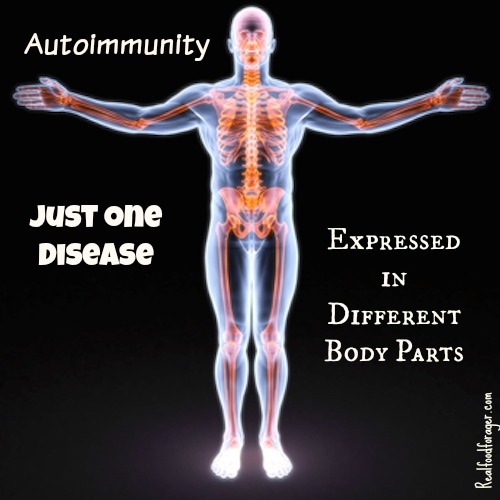
Autoimmunity is a broad condition that has been segmented by medical specialties. Autoimmunity is just one disease expressed in different body parts.


There are over 80 different diagnosed autoimmune diseases and they are all treated in different, yet somewhat similar ways with the ultimate goal being to suppress the inflammatory immune response. However, in conventional medicine the patient is never regarded in a holistic way.


Patients find themselves running to many different specialty doctors who are not communicating with each other, but rather are subscribing different medications for each ailment. There might be gastrointestinal symptoms, skin issues or joint problems. Patients can end up with handfuls of prescriptions but no long term cohesive plan.


It’s frustrating to talk to a doctor yet never get to the bottom of why this has happened. The conventional approach is to essentially put a patch on the problem with stronger and stronger medications, while the disease progresses. That said, when there is a severe flare of the symptoms, these strong medications are useful and appropriate.


The holistic approach looks at the entire list of symptoms and tried to get to the basic pathology that underlies them. This may involve conventional testing as well as testing through functional medicine labs.


Intestinal Barrier Dysfunction May Develop in Many Autoimmune Diseases


Intestinal Barrier Dysfunction is a hallmark of autoimmunity. The immune system is housed in the gastrointestinal tract. When there is inflammation present, the lining of the intestine becomes damaged and becomes leaky. This allows larger molecules of food and toxins to enter the bloodstream, become systemic and travel to extra-intestinal areas of the body. These areas include the joints, skin and other organs.


All autoimmune conditions have the common denominator of intestinal permeability. In this condition, abnormally high levels of zonulin are present. This protein regulates the permeability of the tight junctions of the intestinal barrier. Once the gut is permeable, immune responses to foods can occur.


In this study published in 2014, researchers worked with experimental autoimmune encephalomyelitis (EAE), which is the prototypic animal model of MS in mice.


At the onset of the disease, they found intestinal permeability, increased zonulin and alterations in the mucosal layers of the intestines. Significantly, they found this in a disease of the brain. The researchers concluded,


Our findings show that disruption of intestinal homeostasis is an early and immune-mediated event in EAE. We propose that this intestinal dysfunction may act to support disease progression, and thus represent a potential therapeutic target in MS. In particular, an increased understanding of the regulation of tight junctions at the blood-brain barrier and in the intestinal wall may be crucial for design of future innovative therapies.


Perhaps this concept of intestine involvement can be generalized to many of the other autoimmune diseases – in fact it is.


Today in the research labs they are looking at auto-antibodies. By testing these antibodies they can predict what diseases a person may get years ahead of the expression of the disease. Hopefully in the next 10 years this kind of testing will be more available and used clinically.


Through the science of epi-genetics we know that environmental influences will affect the expression of genes. This may lead us to develop a way to prevent this expression.


Leaky Gut is Implicated in Celiac and All Autoimmune Diseases


In February 2012 in the journal, Clinical Reviews in Allergy and Immunology a paper called Leaky gut and autoimmune diseases was published. The author, Alessio Fasano, M.D., had been researching this topic in relationship to celiac disease and gluten sensitivity. The review paper he wrote is focused on the role of impaired intestinal barrier function (leaky gut) on autoimmune pathogenesis. In short, he is trying to get to the real causes of autoimmunity.


In this paper, Dr. Fasano proposes a new theory that suggests that autoimmune disease is not only preventable, but also reversible. Amazing!


It involves a perfect storm of three conditions:


  1. Increased intestinal permeability (leaky gut)
  2. A genetic predisposition to autoimmunity
  3. An exposure to the environmental trigger (in this case gluten)

What this means is that people who have a leaky gut, as well as the genetics for celiac disease, can develop autoimmunity when they eat gluten. This will cause intestinal damage. The increased intestinal permeability that is part of the leaky gut, allows the environmental trigger (which in this case is gluten) to access the body and this triggers the genetic predisposition.


Conventional understanding of celiac included variable numbers 2 and 3, but instead of leaky gut, the third variable was the presence of circulating auto-antibodies to the enzyme tissue transglutaminase. Using these antibodies excludes many people who do not test positive for them – however, they may still have problems with gluten (gluten sensitivity).


Acknowledging that auto-antibodies are present does not explain why they are there. Fasano’s theory does explain this. Furthermore, it suggests that if you can cure the leaky gut, you can cure the autoimmune disease.


Routine Blood testing for Autoimmunity


Each condition also has their own set of blood markers used for the initial diagnosis in addition to these listed below that are used as maintenance markers.


  • CBC w/Diff
  • CMP-14
  • HAIc – sugar in blood stimulates immune cells to release inflammatory cytokines
  • Insulin – fasting and 2 hour post prandial
  • Homocysteine — shows how we are methylating –if it is high must look at MTHFR and other genetic snps
  • CRP – is an inflammation marker
  • Sedimentation rate – is an inflammation marker
  • Iron Panel – check for anemia
  • Vit D (25-OH vitamin D) – ideally levels over 50
  • Thyroid antibodies and complete panel including T3, T4, TSH, and reverse T3

Environmental Triggers in Autoimmunity


The environmental trigger is the third aspect of the autoimmunity perfect storm. Some of these are:


  • Gluten – Testing for celiac disease overlooks a lot of the folks who are gluten sensitive – just eliminate gluten (and maybe all grains) if you have autoimmunity
  • Food Sensitivities – IgG response is delayed and not traditionally performed by a medical allergist even though these are more common and inflammatory – IgE is for immediate allergy testing
  • Nutrient deficiencies – Organic acids testing and RBC testing
  • Stress and Hormone Imbalance – Organic acids testing – organic acids are urinary metabolytes – In cases of enzyme insufficiency certain metabolytes get kicked out into the urine and can be identified
  • Dysbiosis – Use stool testing to identify some of the bacteria and yeast
  • Infections – Use stool and blood testing
  • Toxins – Hair analysis for heavy metals and xenobiotics, pesticides, etc.

Treatment Based in the 4R Approach


  • Remove – gluten, dairy, egg, nuts and other potential allergens, as well as aspirin, NSAIDS
  • Replace – support function in the digestive tract with enzymes and HCl if needed
  • Reinoculate – the bowel with prebiotics and probiotics and a diet that includes resistant starch
  • Repair – the gut mucosa with gelatin rich bone broths, L-glutamine and other nutrients

This approach attempts to uncover the actual cause and imbalances in each individual rather than simply putting a bandaid on the symptoms. Each individual has their own set of imbalances and this needs to be corrected in a specific and individual way. Using conventional medicines that suppress the symptoms may be necessary alongside the integrative functional approach while healing is going on.


More and more there are chiropractors, naturopaths and functional medicine doctors that take this approach. As always, never change your diet, medicines or supplements without involving your health care provider.


Get the Most Current Information about the Microbiome


Are you as fascinated by the microbiome as I am? Are you hoping for a cure through this new research explosion?


Learn how to make bone broth and soups full of collagen and gelatin in my ebook Beyond Broth – on sale today!


Check out my newest ebook, Heal Your Microbiome Optimize Your Health – on sale today!


Original article and pictures take realfoodforager.com site
пятница, 8 мая 2009 г.

Attitude Adjustment

Attitude Adjustment
Need an attitude adjustment? - ohlardy.com

I may receive a commission if you purchase something mentioned on this page. See more details here.


Perhaps you have found yourself in a situation where you could use an attitude adjustment. No? Then perhaps it is everyone else around you!!!


I have to say, the biggest surprise in my Essential Oil journey has been how they can profoundly affect emotions. I used to think that was weird hocus pocus, until I was able to see it first hand. Not only the calming abilities of certain oils, but how they can actually improve the moods of those in my house. Because, lets get real here, THEY are the ones who need the attitude adjustment. Not me! (Actually, this blend has gotten me out of a few sticky situations – I am sure the kids were greatful!)


For this blend, I like to make it in a roll on so that it is convenient and easy to use! And it is labeled appropriately in my drawer, so we can all easily find it! And just between me and you? I keep one in my purse, too! I just never know when it could come in handy!


This blend has 4 oils. Lemon, Stress Away, Joy, and Abundance! Lemon is incredibly uplifting, Stress Away, well, it totally does what it says it does, Joy encourages hope and overcomes stress, and Abundance promotes calming, emotional balance, and positive thoughts!


Need an attitude adjustment?

9a87c3db63071476855326-51332711_m.jpg

Original article and pictures take ohlardy.com site

четверг, 7 мая 2009 г.

Assisted Living & Long Term Care

Assisted Living & Long Term Care

2017 Copyright. All Rights Reserved.


The Sponsored Listings displayed above are served automatically by a third party. Neither the service provider nor the domain owner maintain any relationship with the advertisers. In case of trademark issues please contact the domain owner directly (contact information can be found in whois).


Privacy Policy


Original article and pictures take colorfuleatsnutrition.com site

понедельник, 4 мая 2009 г.

Arugula Pasta Salad

Arugula Pasta Salad
This pasta dish with fresh arugula and tomatoes, combined with garlic and olive oil just screams spring time to me!  The Homesteading Hippy #homesteadhippy #fromthefarm #recipes

This pasta dish is made withe fresh tomatoes, garlic, and garden greens for a treat all year long!


It’s a quick and simple meal to make for those busy nights, and a great way to get green veggies into your pickier eaters. I used this as a way to introduce arugala to my family. It has a peppery bite to it, but is so good for you. Arugula actually is a cruciferious veggie, in the same family as broccoli. It provides calcium and vitamin C as well as other valuable phytonutrients. Paired with fresh tomatoes, garlic and olive oil, it is out of this world delicious!


This pasta dish with fresh arugula and tomatoes, combined with garlic and olive oil just screams spring time to me!  The Homesteading Hippy #homesteadhippy #fromthefarm #recipes

You will need


  • 1 pound pasta, penne or shells work great for this

  • (brown rice pasta works great for a gluten free option as well)


  • 3 campari tomatoes, diced in quarters. You could also use 1 pound cherry or grape tomatoes, halved.

  • 1 cup olive oil

  • 2 cloves garlic, minced

  • 1 tsp salt

  • 1/2 tsp black pepper

  • 5-6 ounces Arugula

  • (I have seen both size packages at different stores, and both work well in this recipe)


    This pasta dish with fresh arugula and tomatoes, combined with garlic and olive oil just screams spring time to me!  The Homesteading Hippy #homesteadhippy #fromthefarm #recipes

    Begin by mincing the garlic and quartering the tomatoes. Add both to a medium sized mixing bowl and cover with olive oil. Sprinkle salt and pepper and mix well. Allow to sit while pasta is cooking to blend flavors.


    Cook your pasta according to package directions.


    Drain pasta, and add to mixing bowl with the tomatoes and garlic. Add the arugala and mix together gently.


    This pasta dish with fresh arugula and tomatoes, combined with garlic and olive oil just screams spring time to me!  The Homesteading Hippy #homesteadhippy #fromthefarm #recipes

    Serve at once, and sprinkle with feta cheese if desired.


    Other great greens and cheese mixes for this dish:
  • spinach and mozzerella
  • swiss chard and fresh parmesan
  • mustard greens and goat’s milk cheese
  • stocks and broth newsletter


    Original article and pictures take thehomesteadinghippy.com site

    вторник, 28 апреля 2009 г.

    Artificial Sweeteners are Bad for Brain, Blood Sugar and Gut Bacteria

    Artificial Sweeteners are Bad for Brain, Blood Sugar and Gut Bacteria
    aspartame, artificial sweeteners
    Artificial Sweeteners: Bad for Brain, Blood Sugar and Gut Bacteria

    Artificial sweeteners will not prevent weight gain or diabetes. Actually, artificial sweeteners are bad for brain, blood sugar and gut bacteria.


    Studies show the very negative effects these artificial sweeteners have not only on the brain, but also on the microbiome and glycemic control!


    What are the Artificial Sweeteners?


    The most commonly used artificial sweeteners are saccharin (Sweet and Low), sucralose (Splenda), and aspartame (Equal and Nutrasweet). They are recommended to people with prediabetes, diabetes, and obesity because they have no calories and we cannot digest them, yet they can taste up to twenty thousand times sweeter.


    Artificial sweeteners are found in many common processed foods such as commercial yogurts, diet sodas and other commercial drinks, cereals, packaged foods and sugar-free desserts. They are medically recommended to people with type 2 diabetics, but new research shows that recommendation needs to be reevaluated.


    We have known for years that these artificial sweeteners are carcinogenic, neurotoxic and cause many seemingly unrelated effects on people – especially children. In fact, saccharin was taken off the market for a while due to its cancer causing properties.


    There has been a surge in obesity and metabolic syndrome in the American population. Metabolic syndrome is a cluster of signs in people (hyperglycemia/insulin resistance, obesity and dyslipidemia), who are at high risk of developing atherosclerotic CVD and type 2 diabetes.


    In turn, the food industry has responded by providing new sweeteners to take the place of sugar, which creates so many health problems. While that would seem to be a good idea, these artificial sweeteners have a slew of problems of their own.


    Artificial Sweeteners – Bad for the Brain


    Aspartame is the chemical in Equal and Nutrasweet and we have known for years that it affects the brain. The controversy exists because it is a huge money maker for food manufacturers and FDA approved, in spite of the numerous studies that show adverse reactions to this chemical.


    Aspartame is composed of phenylalanine (50%), aspartic acid (40%) and methanol (10%). Phenylalanine is involved in neurotransmitter regulation and aspartic acid is considered to be an excitatory neurotransmitter. Aspartic acid is also a precursor to glutamate, asparagines and glutamine. Methanol, is converted in the body to formate, which can be excreted or may produce formaldehyde (carcinogenic), diketopiperazine (carcinogenic) and a number of other highly toxic derivatives. Although it is only a small percentage of the product, methanol can be quite toxic for some people.


    For instance, this study published in Biological Psychiatry was halted by the Institutional Review Board after only 13 people completed the study. They halted the study because of the severity of reactions within the group of patients with a history of depression. The researchers concluded that,


    individuals with mood disorders are particularly sensitive to this artificial sweetener and its use in this population should be discouraged.


    In this review study published in the European Journal of Clinical Nutrition, researchers studied the effects of aspartame on the brain. They noted that neurological and behavioral disturbances such as, headaches, insomnia and seizures have been reported in previous studies. They recognized that these problems are due to changes in brain concentrations of neurotransmitters, such as, norepinephrine, epinephrine and dopamine.


    The researchers also noted that,


    excessive aspartame ingestion might be involved in the pathogenesis of certain mental disorders (DSM-IV-TR 2000) and also in compromised learning and emotional functioning.


    In a more recent study published in Research in Nursing and Health, high aspartame ingestion was studied compared to a low aspartame diet. Healthy adults consuming a study-prepared high aspartame diet (25 mg/kg body weight/day) for 8 days and then a low aspartame diet (10 mg/kg body weight/day) for 8 days, with a 2-week washout between the diets. They were then evaluated for differences in cognition, depression, mood, and headache.


    Participants on the high aspartame diet were found to have more irritable mood, exhibited more depression, and performed worse on spatial orientation tests. The researchers concluded,


    Given that the higher intake level tested here was well below (my emphasis) the maximum acceptable daily intake level of 40-50 mg/kg body weight/day, careful consideration is warranted when consuming food products that may affect neurobehavioral health.


    That said, there are many studies, like this one, that show the safety of ingesting aspartame, thus the controversy. Personally, I cannot go near aspartame as it gives me headaches. As a clinician, I have found quite a few patients that were relieved of headaches, depression and brain fog when they stopped using all aspartame products.


    Sadly, with the low fat edicts from the government, many people have jumped to buy only low fat, low calorie processed food – much of which is flavored with aspartame.


    Artificial Sweeteners – Bad for Blood Sugar


    Researchers at the Weizmann Institute of Science in Rehovot, Israel, discovered that artificial sweeteners not only do not prevent diabetes but,


    might actually be contributing to and possibly driving the epidemic that it aims to prevent (my emphasis).


    To prove it, they did a series of experiments. In the first part, they added one of the top three artificial sweeteners, saccharin, sucralose or aspartame – to the drinking water of healthy young mice. They used the equivalent to the maximum daily dose as set by the FDA. They set up three groups: mice drinking artificial sweeteners, mice drinking glucose and mice drinking plain water.


    After 11 weeks, the mice were given a glucose tolerance test and blood samples were taken. The researchers found that the group drinking the artificial sweeteners had blood glucose levels spiking higher than both control groups and that also took longer to drop back to normal. This shows glucose intolerance or dysglycemia or prediabetes – call it what you will.


    Since we know that artificial sweeteners are not digested, they pass along to the colon where they encounter gut bacteria. The second part of the research was designed to study what happens to the microbiome when artificial sweeteners are ingested.


    The researchers wiped out the gut bacteria of mice who had been given saccharin, by giving them antibiotics. This seemed to cure the glucose intolerance.


    Artificial Sweeteners – Bad For Gut Bacteria


    The researchers further investigated by transferring the gut bacteria of mice who had consumed saccharin into mice whose guts were bacteria-free – a fecal transplant.


    The results?


    The previously healthy mice became glucose intolerant. Blood sugar regulation is arguably the most important indicator of health.


    The last part of the experiment studied a small group of humans who were given the highest allowed daily dose of saccharin. For a person weighing 150 pounds, this would be equivalent to three to four sachets of sweetener taken three times per day (yikes)!


    They found 4 out of the 7 people to have changes in their gut bacteria and these changes were associated with decrease in their glucose tolerance. The subjects who had no change in their glucose tolerance also had no change in their gut bacteria.


    Taking it a step further, the researchers transplanted stool from two of the subjects who had changes in their gut bacteria (humans) and two non-responders (humans) into sterile mice. Only the mice that received gut bacteria from subjects who had changes in their gut bacteria became glucose intolerant.


    While this is a very small sample, in conjunction with the results from the mouse studies, it is clear that the artificial sweeteners are affecting glucose tolerance as well as gut bacteria in a very negative way. With all the research going on regarding the microbiome (including the effects of food additives on the microbiome), this is showing just how much our gut bacteria are involved in every metabolic process in our body.


    Sure, more studies are needed, but there are already plenty that show a very detrimental effect by artificial sweeteners on health in general.


    Have you had negative reactions to artificial sweeteners? Do you know anyone still using artificial sweeteners? Leave a comment and let me know! Please share this information with them!


    Original article and pictures take realfoodforager.com site

    Apple With Carrot And Raisins

    Apple With Carrot And Raisins

    Apple With Carrot And Raisins. A nutritious meal for babies 8 months and above.


    Apple with Carrot and Raisins

    A few months back I was reading about introducing more variety of food groups to my daughter’s diet. That time I came across “Raisins” as an add-on to any baby food.


    So, in today’s shared recipe, I have added raisins to apple and carrots then have given a hint of nutmeg to it. Raisins, apples, and carrots are all high in nutritional value and can benefit your growing baby.


    I started giving my little one raisins around 9 months. Raisins are considered to be one of the choking hazards, as babies are not able to chew in this tender age. So it is Extremely Important to give raisins in a form of puree Only.


    Apple with Carrots

    Raisins are dried grapes. They can be a very nutritious addition to a baby’s diet. Raisins are high in potassium and iron. They are also rich in calcium and fiber.


    Hence adding little raisins to your baby’s food relieve constipation. Other benefits include maintaining bone health, cancer prevention and helps in absorption of other proteins, vitamins, and minerals.


    When buying raisins for baby food, it’s better to go for organic ones. Raisins are dried grapes, and imported grapes appear on the Environmental Working Group’s list of the ‘Dirty Dozen‘ – which contain the 12 foods found most frequently to contain pesticide residues.


    Also, organically produced raisins do not contain sulfites which are used to maintain raisins color. These can sometimes cause allergic reactions.


    So, with little caution Raisins can be a wonderful addition to your baby’s diet.


    Apple With Carrots And Raisins-Easy Baby Meals-www.easybabymeals.com
    4 from 1 vote

    • You can cook this recipe in a steamer basket too.
    • It is important to make a puree of raisins and then serve it to a baby.
    • Babies at this age cannot chew raisins and they can be a potential choking hazard.
    • I haven't peeled the apple skin. You can peel it if you wish to.

    Important Note:


    Talk to your baby’s Pediatrician before starting any new food.


    © EasyBabyMeals. All the content is copyright protected. Do not use without prior permission.


    Original article and pictures take www.easybabymeals.com site