понедельник, 18 февраля 2013 г.

How Modern Life Depletes Your Gut Microbes

How Modern Life Depletes Your Gut Microbes

Today's article is shared with the permission of Dr. Mercola. The gut microbiome is SO incredible and we are just now barely scraping the surface of this amazing part of our body. I am excited to see what the next 10, 20, 30 years brings in regards to this area of health research. I think we are going to continually become amazed at just how much our microbiome impacts our health and the health of future generations.


Before we dive in, I wanted to let you know about two amazing gut health summits that I highly recommend if people are interested in learning more about gut health, how to heal your gut, the role that gut health plays in our overall health, etc.


Sean Croxton's Digestion Sessions is an excellent resource. Sean continually puts together such amazing information in a high-quality, dynamic way. Such a vast amount of information all in an easy-to-use digital library. It is by far one of my favorite summits of all time. Learn more here.


The Heal Your Gut Summit was another favorite and featured some of my favorite speakers, as well as some new speakers that I have never heard of before. Another awesome digital library of both video and written content. Learn more here.


Now, on to Dr. Mercola's article! Happy learning!


~~~~~~


By Dr. Mercola


Your intestinal microflora—aka your microbiome—is an integral part of your immune system, and over the past several years, research has revealed that microbes of all kinds—bacteria, fungi, and even viruses—play instrumental roles in the functioning of your body.


For example, beneficial bacteria, also known as probiotics, have been shown to:


  • Counteract inflammation and control the growth of disease-causing bacteria
  • Produce vitamins, amino acids (protein precursors), absorb minerals, and eliminate toxins
  • Control asthma and reduce risk of allergies
  • Benefit your mood and mental health
  • Impact your weight, for better or worse

The composition of the microbiome varies from person to person based on factors such as diet, health history, antibiotic exposures, geographic location, and even ancestry, and it’s readily influenced by diet, chemical exposures, hygiene, and other environmental factors.


In fact, it’s become increasingly clear that destroying your gut flora with antibiotics and pharmaceutical drugs, harsh environmental chemicals, and toxic foods is a primary factor in rising disease rates.


For all of these reasons, and more, I recommend a diet rich in whole organic, unprocessed foods along with traditionally cultured or fermented foods and plenty of fiber.


A high-quality probiotic supplement can also be a helpful ally to restore a healthy balance to your gut flora—especially when taking antibiotics, and/or when eating processed foods, as both of these tend to decimate the colonies of beneficial microbes in your gut.


Modern Lifestyle Depletes Beneficial Microbes


A study1,2 comparing the microbiome of the Yanomami—an indigenous tribe living in remote areas of the Amazon jungle—against those of Americans; a group of Venezuelan Amazonian indigenous people called the Guahibo; and people in Malawi in southern Africa, reveals that the modern lifestyle has dramatically altered people’s microbiome.


For all its conveniences, it takes a considerable toll on the microbes in your gut, which in turn can have far-reaching health consequences. For example, recent research3,4 suggests that repeated use of antibiotics may raise your risk for type 2 diabetes by altering the composition of your gut bacteria.


After analyzing health data from one million Britons, strong dose-dependent correlations were found between the use of certain antibiotics– penicillins, cephalosporins, quinolones, and/or macrolides specifically—and diabetes incidence. The correlation held even when other contributing factors were taken into account.


  • Two to five courses of penicillin increased diabetes risk by eight percent
  • More than five courses of penicillin increased the risk by 23 percent
  • Two to five courses of quinolones increased the diabetes risk by 15 percent
  • More than five courses of quinolones increased the risk by 37 percent

Interestingly, even the hunter-gatherer Yanomami tribe—which had never come in contact with outsiders prior to the researchers’ arrival, and have never been exposed to antibiotics—were found to harbor microbes with antibiotic-resistant genes.


According to The Star:5


“This adds persuasive evidence that bacteria already have the ability to resist antibiotics, even prior to being attacked by pharmaceutical drugs — a finding that underscores the urgency of the antibiotic crisis, where pathogenic bacteria are developing strategies for defeating even the most powerful drugs on the market.”


Americans Have Lost a Wide Variety of Health Protective Gut Microbes


In all, the Yanomami had about 50 percent greater microbial diversity than American subjects, and 30-40 percent more diversity than the Guahibo and the Malawians, the latter two of which have adopted some Western lifestyle components, such as living indoors and using antibiotics.


According to one of the authors:6


“As cultures around the world become more ‘Western,’ they lose bacteria species in their guts… At the same time, they start having higher incidences of chronic illnesses connected to the immune system, such as allergies, Crohn's disease, autoimmune disorders, and multiple sclerosis.

So the big question is: Are these two facts related? It's not clear if more diversity in the microbiome is healthier. But maybe we have lost species with important functions.”


Sophisticated Sanitation May Be More Detrimental to Your Microbiome Than Previously Thought


While antibiotics are indeed potent adversaries when it comes to maintaining a healthy diversity of microbes in your gut, other factors also play a significant role.


Pesticides, processed food, Caesarean sections, and an over-reliance on antimicrobial products have also contributed to the dramatic decline in the range of microbes occupying people’s guts.


In fact, another recent study7 suggests that sophisticated sanitation may be a greater factor than antibiotics when it comes to destroying microbial diversity.


Here, researchers looked at the microbiome of two indigenous populations in Papua New Guinea who, unlike the Yanomami tribe, regularly use antibiotics, yet still have significant microbial diversity in their guts. These two groups were found to have about 47 different species that Americans don’t have.


The data collected in this study suggests that lack of sanitation may be the reason for the Papua New Guineans’ microbial diversity. NPR reports:8


“Sophisticated sanitation and hygiene in Western society might be limiting the species that end up in our guts… Bacteria spread more easily from person to person in Papua New Guinea because the communities don't have sewage systems and clean drinking water. ‘Clean drinking water is one of the most important achievements of Western culture,’ [lead author Jens] Walter says. ‘It prevents the spread of infections, but it also prevents the easy exchange of our microbiomes.’”


The Importance of Fiber for a Healthy Microbiome


One of the quickest and easiest ways to improve your gut health is via your diet. Beneficial microbes tend to feed on foods that are known to benefit health and vice versa. Sugar, for example, is a preferred food source for fungi that produce yeast infections and sinusitis, whereas healthy probiotic-rich foods like fermented vegetables boost populations of health-promoting bacteria, thereby disallowing potentially pathogenic colonies from taking over.


Fiber is also important for a healthy microbiome. Some of the microbes in your gut specialize in fermenting soluble fiber found in legumes, fruits, and vegetables, and the byproducts of this fermenting activity help nourish the cells lining your colon. Some of these fermentation byproducts also help calibrate your immune system, thereby preventing inflammatory disorders such as asthma and Crohn’s disease.9,10


As reported by Scientific American,11 recent research shows that simply eating more fiber can shift your microbial profile into one that is correlated with leanness. Fiber has long been considered a factor that promotes weight loss, and its impact on your gut bacteria appears to be one key mechanism responsible for this effect.


Other research has shown that microbes starved of fiber can begin feeding on the mucus lining of your gut, thereby triggering inflammation, which may promote or exacerbate any number of diseases, including ulcerative colitis.12 The study also found that in order to avoid this, you need to eat fiber every single day.


Research published a couple of years ago also showed that common bacterial metabolites—short-chain fatty acids (SCFAs)—selectively expand regulatory T cells called Tregs, which are critical for regulating intestinal inflammation.13 According to one of these studies:14


Treg cells suppress the responses of other immune cells, including those that promote inflammation. This finding provides a new link between bacterial products and a major anti-inflammatory pathway in the gut.” Other research15,16 has linked Tregs—which are fed by dietary fiber—to the prevention and reversal of metabolic syndrome, in part by stimulating oxidative metabolism in your liver and adipose tissue. So, as you can see, fiber appears to nourish microbes that in turn provide a variety of health benefits via a number of different pathways.


Probiotics Again Found Beneficial for Symptoms of Depression


Beneficial microbes also play an important role in your mental health—some researchers have even proposed that probiotics might serve the same role as antidepressants. Most recently, Psychologists Laura Steenbergen and Lorenza Colzato from the Leiden Institute of Brain and Cognition published a paper17 showing that people who took a multi-strain probiotic for at least four weeks reported a lessening of rumination—recurring, persistent thoughts about something distressing that has or may happen.


As explained by Dr. Steenbergen:


Rumination is one of the most predictive vulnerability markers of depression. Persistent ruminative thoughts often precede and predict episodes of depression.”


According to Dr. Colzato:


“Even if preliminary, these results provide the first evidence that the intake of probiotics may help reduce negative thoughts associated with sad mood. As such, our findings shed an interesting new light on the potential of probiotics to serve as adjuvant or preventive therapy for depression.”


Beware: Polysorbate 80 and Other Emulsifiers Can Have Adverse Effect on Your Gut Flora


A processed food diet is anathema to gut health for a number of reasons. First of all, processed foods tend to be loaded with genetically engineered ingredients of questionable safety, including corn-based fructose, which has been repeatedly shown to promote metabolic dysfunction to a greater degree than other sugars. Ingredients may also be contaminated with glyphosate (recently classified as a Class 2 A carcinogen), which can decimate gut health in a number of different ways.


Recent research published in the journal Nature18 also suggests that polysorbate 80, an emulsifier found in many processed foods (as well as vaccines) can alter your intestinal terrain, thereby promoting obesity and inflammatory health conditions. As reported by Prevent Disease:19


“The study used mice to test the effect of two common emulsifiers—carboxymethylcellulose and polysorbate-80—on the microbiome make up and metabolism, finding that relatively low-level concentrations of the emulsifiers resulted in distinct alterations to the gut microbial ecosystem (microbiota) and led to low-grade inflammation and the onset of metabolic syndrome…

[T]he research team reported that the emulsifier-induced metabolic syndrome was associated with microbiota encroachment, altered species composition and increased pro-inflammatory potential. ‘These results support the emerging concept that perturbed host-microbiota interactions resulting in low-grade inflammation can promote adiposity and its associated metabolic effects,’ wrote the team.

Moreover, they suggest that the broad use of emulsifying agents might be contributing to an increased societal incidence of obesity/metabolic syndrome and other chronic inflammatory diseases.”


Optimizing Your Microbiome May Be One of Your Most Important Disease Prevention Strategies


Optimizing your gut flora may be one of the most important things you can do for your health, and the good news is that this isn’t very difficult. However, you do need to take proactive steps. To optimize your microbiome both inside and out, consider the following recommendations:


Do:


  • Eat plenty of fermented foods. Healthy choices include lassi, fermented grass-fed organic milk such as kefir, natto (fermented soy), and fermented vegetables. If you ferment your own, consider using a special starter culture that has been optimized with bacterial strains that produce high levels of vitamin K2. This is an inexpensive way to optimize your K2, which is particularly important if you’re taking a vitamin D3 supplement.
  • Take a probiotic supplement. Although I'm not a major proponent of taking many supplements (as I believe the majority of your nutrients need to come from food), probiotics is an exception if you don’t eat fermented foods on a regular basis.
  • Boost your soluble and insoluble fiber intake, focusing on vegetables, nuts, and seeds, including sprouted seeds.
  • Get your hands dirty in the garden. Germ-free living may not be in your best interest, as the loss of healthy bacteria can have wide-ranging influence on your mental, emotional, and physical health. According to the hygiene hypothesis, exposure to bacteria and viruses can serve as “natural vaccines” that strengthen your immune system and provide long-lasting immunity against disease. Getting your hands dirty in the garden can help reacquaint your immune system with beneficial microorganisms on the plants and in the soil.
  • Open your windows. For the vast majority of human history the outside was always part of the inside, and at no moment during our day were we ever really separated from nature. Today, we spend 90 percent of our lives indoors. And, although keeping the outside out does have its advantages, it has also changed the microbiome of your home. Research23 shows that opening a window and increasing natural airflow can improve the diversity and health of the microbes in your home, which in turn benefit you.
  • Wash your dishes by hand instead of in the dishwasher. Recent research has shown that washing your dishes by hand leaves more bacteria on the dishes than dishwashers do, and that eating off these less-than-sterile dishes may actually decrease your risk of allergies by stimulating your immune system.

Avoid:


  • Antibiotics, unless absolutely necessary (and when you do, make sure to reseed your gut with fermented foods and/or a probiotic supplement). And while some researchers are looking into methods that might help ameliorate the destruction of beneficial bacteria by antibiotics,20,21 your best bet is likely always going to be reseeding your gut with probiotics from fermented and cultured foods and/or a high-quality probiotic supplement.
  • Conventionally-raised meats and other animal products, as CAFO animals are routinely fed low-dose antibiotics, plus genetically engineered grains loaded with glyphosate, which is widely known to kill many bacteria.
  • Chlorinated and/or fluoridated water.
  • Processed foods. Excessive sugars, along with otherwise “dead” nutrients, feed pathogenic bacteria. Food emulsifiers such as polysorbate 80, lecithin, carrageenan, polyglycerols, and xanthan gum also appear to have an adverse effect on your gut flora.22 Unless 100% organic, they may also contain GMOs that tend to be heavily contaminated with pesticides such as glyphosate.
  • Agricultural chemicals, glyphosate (RoundUp) in particular.
  • Antibacterial soap, as they too kill off both good and bad bacteria, and contribute to the development of antibiotic-resistance.

Original article and pictures take www.deliciousobsessions.com site

четверг, 14 февраля 2013 г.

How I’m Helping My Daughter’s Special Needs via Swagbucks, Surveys, and Coupon Apps

How I’m Helping My Daughter’s Special Needs via Swagbucks, Surveys, and Coupon Apps
free items

Testimonial from Samantha


About 9 months ago, we found out that my daughter had autism, it was a shock and has been something we have spent these last 9 months dealing with, as well as proactively seeking treatment for her.


We have gone the traditional routes with speech, occupational, and physical therapies for her (which are thankfully covered by insurance) as well as the biomedical route.


We also immediately started her on a Gluten-free, Casein-free diet. It is expensive but I have been able to find great deals using the coupons and match-up from your weekly Organic and Natural coupon posts.


One thing that kept coming up in my web research was a cookbook called “Special Diets for Special Kids“. I really wanted this cookbook, but couldn’t justify the splurge on our already tight budget — so I check my Swagbucks and saw that I had enough gift cards to cash out for $25 (which was enough to pay for the book!)


Another route I have been researching (and was happy to see your post on) was essential oils. I am trying go avoid medications whenever possible, but still keep my family healthy.


While we are somewhat obsessive about hand washing and have started taking a daily multivitamin and even probiotics, I wanted to try some essential oils too. I have been able to purchase “Essential Oils for the Healthy Child” as well as few synergy blends from Plant Therapy using my various on-line earnings, as well as a sample pack from Native American Nutritionals.


So how have I been able to make money online?


Most of the ideas below came directly from your website!!


1. Swagbucks:


I try to run the Swagbucks TV app on my phone or tablet throughout the day as well as do the Daily Poll, Encrave, NOSO, and Discover Content.


2. Surveys:


I have also signed up with several survey companies including Pinecone, MyPoints, Opinion Outpost, Survey Spot, Inbox Dollars, and MySurvey.


While I don’t do those every day or even every week, when I get a free moment or while I’m watching TV with my husband, I will do a few surveys. I have earned about $10 or more from each of those survey companies — which I then cash out to my PayPal account.


3. Coupon Apps:


My final avenue of income as a SAHM is coupon apps such as Ibotta, Jingit, Shopmium, Checkout 51, and Saving Star.


I check each of those after a trip to the grocery store and upload receipts to those for matching offers. Most of those have a PayPal option as well, which I often choose.


This has been a hard year for us, both emotionally and financially, with little money to throw around. But with using my precious free time (I don’t have much as a mommy to 2 preschoolers and an infant) I have been able to make a bit of extra cash to purchase some helpful items for my daughter and my family as a whole.


Thank you!


Original article and pictures take moneysavingmom.com site

среда, 13 февраля 2013 г.

How I stopped yelling at my kids… & how it’s changed our home

How I stopped yelling at my kids… & how it’s changed our home
How I Stopped Yelling at My Kids

I thought I was a patient person… then I had kids.


I said I’d never yell at my kids… and then I had kids.


I pictured myself as a sweet, loving, always-cheerful mom… then I had kids.


Motherhood has stretched me and humbled me. It’s brought out the best in me and the worst in me. And, recently, with all the processing of our big move, there has been a lot more of the worst and very little of the best.


I found myself snapping at my kids more and more frequently, which only served to frustrate me. The more I snapped at my kids, the more frustrated I was at myself. And the more frustrated I was at myself, the more I’d snap at my kids.


It was a vicious cycle and I felt trapped.


One night, I was up late thinking of the kind of mom I’d been and feeling so ashamed of my behavior and the example I was setting before my kids. I started praying and asking God to help me to love my children, to help me have patience with them, and to stop getting so angry with them.


My 4-Week Commitment


As I was praying, an idea birthed in my head. I decided to make a commitment to my husband for the next 4 weeks.


I woke Jesse up to tell him my commitment (I have such a gracious husband — poor guy!). It was this: every time I was tempted to lash out at a child I would, instead, find a very practical way to love that child.


It was a BIG commitment, but he agreed that he thought I could do it and said he was willing to hold me accountable. I went to bed resolving that, by God’s grace, I was going to change the tone in our home.


It Was SO Hard


The first day was very, very hard. One child in particular has been getting on my every last nerve recently. This child knows how to push buttons and seems to make a game of trying to see how much they can annoy me.


Well, the first few hours on that first day of my 4-week commitment, this child tried all their usual tactics. I didn’t get frustrated. I didn’t yell. I didn’t even raise my voice.


Oh, it was very hard. But I’m a stubborn person and I was determined to stick with my commitment to my husband.


Instead, of lashing out, I asked this child to come snuggle next to me. I poured love, love, and more love.


The Change Has Been Amazing!


Within a few hours, this child’s attitude had drastically changed. They were calm, happy, and asking what they could do to help me. I could not believe it!


And this only continued for the next few days. Until finally, I felt like I almost had a completely different child living in my home. It was amazing!


We’re now headed into week #4 of my commitment and I can safely say that this one change in me has changed the tone in our whole home. My children are more helpful and respectful. I am so much happier. Jesse is happier because we’re happier. And our home is much, much calmer.


All because I’m choosing to love instead of lash out.


I decided my 4-week experiment was a smashing success. And I’m going to extend it for another 40 years. Or something like that. ��


unnamed

To help me remember to choose love instead of lashing out, I’ve been wearing this bracelet. It came shortly after I made this commitment. It’s a Mother’s Bracelet from Spark of Amber and it has amber beads — which are supposed to be calming — plus, a bead birthstone for each child.

I received mine as a review product for an upcoming giveaway I’m doing and I’ve decided it’s my physical reminder to stay calm with my children. It’s been surprising to me how having this physical reminder has worked so well. It might sound silly, but every time I see the bracelet on my wrist — which is often! — it reminds me, “Stay calm. Love. Love. Love. Don’t lash out.”


P.S. Another change we made around the same time was to have our children be completely electronics-free (no TV, movies, iPads, etc.) except for family movie night. This has also made a HUGE difference in our home… I’ll have to do a post on that sometime, too!


Subscribe for free email updates from Money Saving Mom® and get my Guide to Freezer Cooking for free!


Original article and pictures take moneysavingmom.com site

пятница, 8 февраля 2013 г.

How I Started Using Essential Oils (and the Mistakes I Made…So You Don’t)

How I Started Using Essential Oils (and the Mistakes I Made…So You Don’t)

I started using essential oils many years ago, but it’s been a journey for me. Here’s my story…and the mistakes I made (to hopefully spare you!).


I started using essential oils because I wanted sleep and for my husband to stop snoring! After I had addressed those issues, I started wondering…. “What else could these do?”


It felt a little crazy to me at first. (And my extended family tended to second that idea!)


But I felt so drawn to the oils, I knew there was something there.


I tried several different brands and talked to different reps to find the right fit for me. At first, I didn’t even know what I was looking for, but once I found it, I knew. So, to save you some time and effort, I thought maybe I would start my blogging here at Keeper of the Home with that information: the WHY and WHERE of essential oils.


Why use essential oils?


The words I typically hear people use when talking about WHY to use essential oils are EMPOWER, NATURAL, SUPPORT, CONTROL.


But when I was just getting started, those words didn’t mean too much to me.


Empower what? Control who?


Now, don’t get me wrong, I LOVE to feel in control of … well, of everything! But I did not realize I could be in control of my health! I had been blind in thinking I had to follow the status quo and react to things in my home rather than be proactive and preventative.


Once that mindset changed, I knew essential oils would be a critical piece of my home life.


Now these words started to mean more to me. I wanted to be in CONTROL of my choices. I wanted to feel EMPOWERED to handle issues as they came up in my home and to support our bodies naturally. All of a sudden I was like this Supermom with all the power in the universe! Though I say that jokingly, it was also true in a sense.


Here's how I got started using essential oils, including mistakes I made. Hopefully this will save YOU! :)
Finding the right essential oils

In my research, I realized that brands mattered and not all oils were created equal. I realized that if I wanted to have the power of this essential oils universe, I needed to choose wisely.


I bought about four different brands when I first started. The two critical things I learned to look for were QUALITY and EDUCATION.


The first bottles I bought from off the shelf were adequate but a little off somehow. One bottle actually crystallized into glass in under a month! And there was no one to tell me what to do or how to do it. I asked the clerks but they really didn’t know any more about oils than they did about organic cheese!


Next, I bought from one direct sales company through a casual acquaintance. She sent me a couple recipes for my oils and a reference book that probably was helpful, but I didn’t know enough to find anything in it. I asked for more help but it was limited.


Finally, I went to a class with my cousin who told me this experience would be different. And although I was highly doubtful and not planning to buy anything else at that point, it was different right away. The education was the piece I was missing. I bought another kit and switched brands right away.


From that point on, the mentor I had signed up with supported me and was always ready to provide tips and talk about options to use my oils. I received another book but she assured me she would look things up for me until I got the hang of it.


This led to one of my pivotal moments with the oils. Approximately one month after getting my second kit of oils, my youngest started kindergarten. Two weeks into the beginning of the year, she developed some chest irritation and I felt like supermom. Here we go!! I will get to use my oils to solve the world’s problems!!


Hmmm…. Not so much. I read the book, put things in her diffuser, put things on her feet…. Put more in her diffuser… tried a different blend. Nothing!


What?! This was supposed to EMPOWER me!! I felt defeated. (And trust me, that was not the first time!)


Finding the right options to support your body can be tricky and we all have those times that things just don’t seem to work. This is why good support is critical.


My mentor saw a Facebook post I made and told me to come over. She looked into several things and recommended two oils for us: Ylang Ylang and Geranium. Wait, these are not related to occasional chest discomfort! BUT, they ARE related to stress, separation, grief, sensitivity….. OHHHHH! Psychologist mom had totally missed the point.


Our bodies will reflect our emotional state and I had missed that completely. Major mom fail! But redemption came from using those oils (my mentor gave me samples – another important thing when you need something right away), and the irritation eased in a couple of days.


My recommendations for essential oils


So, my two recommendations when you choose the right oils for you: know your company and know the quality of the oils you are choosing.


It is always best to buy directly from the distributor so you know no tampering has taken place.


Second, make sure you sign up with someone willing to provide ongoing support and education. That continuing education has been critical for me in using my oils regularly and growing in the journey of controlling my home and empowering our path in stewarding our lives effectively!


I hope that helps you make some decisions for your home, and I would love to provide you the mentoring offered to me with oils you already have or oils you would like to try. Let’s get out there and enjoy the beauty of these amazing options!


Have you tried using essential oils? What’s your experience?


Up Next:


Do you love to diffuse? Just getting started? Here are some great tips to help you get started and even to find the perfect essential…


Do you struggle with choosing the best brand of essential oils? Are you trying to figure out what's best for you and your family? Here…


Ann Timm


Ann Timm considers herself blessed to be the wife of a Christ follower and mother to six amazingly cool kids. She strives to keep a happy, healthy home, although she openly admits to failing often. She loves to share her foibles and encourage other women on their journey to healthy living.


More posts by Ann Timm


Original article and pictures take keeperofthehome.org site

среда, 6 февраля 2013 г.

How I Overcame Fear and Learned to Trust Natural Healing & You can Too

How I Overcame Fear and Learned to Trust Natural Healing & You can Too
trust natural healing

Most of us, including myself, trusted everything we were told about health and healing when we were growing up. Whether the advice came from a doctor, a relative, a college professor, or our own Mother – we believed it, didn't question it, and took the advice. For a long time, the answers to illnesses and health concerns in our society have all come in the form of a prescription or an over the counter medication. For the first 27 years of my life I accepted that medication was the only answer to my health concerns but after not seeing the results I desired time after time – I started asking questions.


Those questions led to a lifelong journey of learning about health and wellness. Since I started this journey it's been a never ending cycle of experimentation with different diets, remedies, healing therapies, and self care routines. Some things worked and some things did not.


I have not taken a prescription medication in over 7 years but there were undeniably a handful of times when I almost did. Sometimes it's scary – especially when it comes to our children. When everyone is telling you to use Children's Tylenol for a fever and your child is clearly uncomfortable it is hard to stick to your beliefs. To be clear, I am certainly not saying that you should not take a prescription medication because there are instances where they are needed (such as Lyme disease and other serious conditions) but I have been lucky to not be in that situation. I was recently reflecting on how I've gotten here – to a place of being confident in natural healing (because I wasn't always this way).


Find a Physician that believes in Natural healing


One of the most impactful things for me has been having the support of a Holistic Pediatrician that believes in a healthy diet and natural healing first. Although it was hard experimenting on myself, it was even harder to do with my children. I didn't ever want my children's health to be left up to an experiment. Having the support of a Holistic Doctor who already knows what works and knows when medication is needed and not needed has been crucial to my transformation. There were times over the years that I've questioned the protocol or I couldn't stand seeing my child feel ill and I want to just give up and buy the over the counter medication but my Pediatrician talked me off the ledge and I stuck to the plan. Every time it has worked and my child has healed by using things that support her immune system instead of masking symptoms and making healing more difficult.


Make friends with people who believe in natural healing


Having a community of Moms around you who also believe in natural healing is invaluable. It's tough to have all “conventional” Mom friends because when you are dealing with an illness their advice is always to give them Tylenol (what's wrong with Tylenol you wonder? Read this post) or decongestant, or any other over the counter medication. It's great to have a few “natural” Moms around to talk to about what is going on with your child for ideas or just support. It really raises my confidence in natural healing when I see others getting results (then I know I'm not crazy). If there is a group in your area – I highly recommend joining The Holistic Moms Network.


Never stop learning


Natural healing and wellness is a journey. I am constantly learning and trying new ways of healing our ailments. Natural healing works but sometimes it takes a little patience and diligence. The frequency and consistency of some remedies is of utmost importance so that is something to always keep in mind – don't give up too quick. Taking courses (especially my education and Institute for Integrative Nutrition), reading books, trying new things, and talking to holistic practitioners are some of the ways I always keep learning about natural healing. The more and more you see the results from natural healing the more your confidence will grow in it's power.


What holds you back from using natural healing methods? What conventional things are you not ready to give up? Share in the comments below.


Original article and pictures take theholisticmama.com site

четверг, 31 января 2013 г.

How I Healed My Infected Finger without Antibiotics

How I Healed My Infected Finger without Antibiotics
What really amazes me is that I had an infection that was SO BAD that it took my entire fingernail as a casualty (a new one is growing underneath – cool and so gross simultaneously), but one single treatment of this natural remedy killed the infection in mere hours (after weeks of suffering & searing hot pain.) I keep this on hand at all times now!

My Infected Finger Story:


Since sometime last winter, I have been battling a sucky immune system. My gut bacteria are valiantly attempting to guard their posts and keep me somewhat healthy. Nonetheless, the stress, poor eating, and the round of antibiotics I chose to take (to my dismay) for my infected lymph nodes have made their job rather difficult indeed.


My healthy gut bacteria is tired and struggling, as evidenced by infection after infection that I’ve been warding off in the last six months. Poor, poor gut bacteria (sadface).


I had a nasty throat infection, when I got altogether too lazy with my natural remedy and didn’t hit it hard enough. It came back as a nasty infection in my lymph nodes (Holy PAINFUL, batman.) Then I took antibiotics. Subsequently, I have felt the beginnings of the following ailments over the last 3-4 months: mastitis, repeated lady-part infections, more sore throats, and then a nastily infected finger by late spring, just under the cuticle and fingernail.


(See, now even you feel sorry for my poor gut bacteria, don’t you?)


I have been able to ward off most of these issues by downing jars of Bubbie’s sauerkraut (for the amazing probiotics) like there’s no tomorrow (my body told me to eat a whole jar in 48 hours – so I did…), taking the high-quality probiotic capsules I bought when I had antibiotics, eating plain high-fat yogurt, and taking colloidal silver in my water here and there. (I think the sauerkraut made the most difference, to be honest. I would eat about a cup of the stuff on top of my burger patty at dinner whenever I felt the least bit of anything starting.)


The infected finger was an annoyance at first. I was in the middle of a terribly stressful family crisis, and basically ignored it for a few weeks. By the time I paid attention, it was hot, red, and swollen. Oh, and super sore. Oops. My bad.


I saw that ignoring it and waiting for it to go away on its own wasn’t going to work (just like with my whining toddler. Huh.)


street

So, I started trying some natural remedies. My mom was bugging me to soak it in salt water, so I did. Many times. For at least half an hour at a time (an eternity when there’s a toddler running around wreaking quinoa-dumping havoc. ahem).


But alas – the infection was too deep, and the salt water was not enough. The infection got worse. I should also mention that I had been using polysporin (antibiotic OTC ointment) since the beginning because I had been too stressed out and busy to even think about figuring out the natural remedy angle. Well, the polysporin was a total fail. I even bought a brand new tube to make sure it wasn’t expired. I wanted it to hurry up and work, and kept at it faithfully. But… nada. I also tried a really cheap brand of tea tree oil mixed with lemon (the blend is for cleaning, I guess?).


The infection got worse – more swollen, more red, more sore. The cuticle was starting to lift up off the nail and funky things were happening. The nail was starting to crack and disintegrate. I was beginning to worry that I’d end up with a round of major antibiotics if the infection started to spread.


Finally, we were packing up one of the last spots in the house for our move, I found my stash of essential oil bottles. My stinker children had taken them and hidden them behind a dresser like a little treasure stash. I had been wondering where they went!


I stared down that bottle of melaleuca (tea tree oil) with my Stern Mother Face. I told it that if it was not going to heal my finger, I’d be very, very disappointed in it. I’d also be super annoyed at having to go to the doctor because ain’t nobody got time for that in the middle of a move, yo.


I tipped it upside down, let two drops fall out onto the infected area, slapped a bandaid on that sucker, and went to bed.


You know the climax of this story already, don’t you? Yes, it was pretty miraculous the next morning. We celebrated with a feast (haha – I wish!) and much rejoicing. The burning pain had been reduced to tenderness, the swelling was down, and the redness was much reduced.


Another few doses (I did it a second time, then again that night, and once more the next day for good measure) later, I was well on my way to 100% in just over 24 hours.


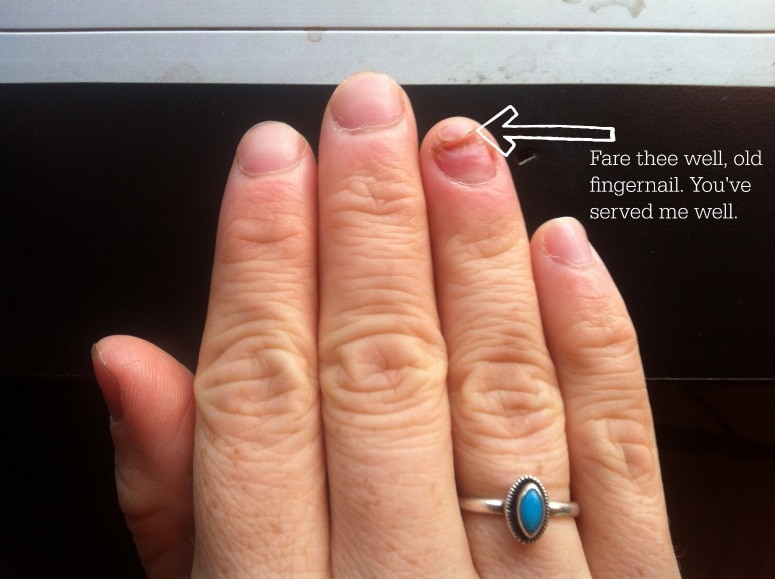
So, now it’s a month later, and I have only one small problem: my fingernail is falling off. I have to trim it and stuff. Ew.


Like, seriously, peeps. It’s so gross. And because I love you, I took a picture. On the windowsill of the coffee shop where I sit, writing this. Here you are:


finger

What really amazes me is that I had an infection that was SO BAD that it took my entire fingernail as a casualty (a new one is growing underneath – cool and so gross simultaneously), but a couple of drops of high-quality melaleuca oil killed the infection in mere hours (after weeks of suffering).


I’ve seen some good results from using EO’s since I was first introduced to them last fall. But nothing like this. I am absolutely in love with melaleuca, and I vow to never be without it again, henceforth forevermore, amen.


This is the oil I now recommend for both purity and a great price.


So, What is Melaleuca, Exactly?


More commonly known as “Tea Tree,” Melaleuca essential oil has over 92 different compounds and limitless applications. The leaves of the Melaleuca tree were used by the Aborigines of Australia for centuries. They would crush the leaves and inhale the oil to promote clear breathing and apply the leaves directly to the skin to help with recovery.


Melaleuca is best known for its purifying properties as well as:


-Analgesic

-Antibacterial

-Antifungal

-Anti-infectious

-Antioxidant

-Antiparasitic

-Antiseptic

-Antiviral

-Decongestant

-Immune Stimulant

-Tissue Regenerative

… just to name a few.


moss

Tea Tree Oil vs. Antibiotic-Resistant Superbugs?


Today, modern science has begun to investigate the effectiveness of this oil against many different types of pathogens and microbes, including resistant strains of MRSA and super bugs. This research is validating the use of this extraordinary natural oil for personal and medicinal consumption.


  • Arthur de Ramon Penfold (1890 – 1980), an Australian chemist, studied tea tree leaves, and discovered their antiseptic properties. Subsequently, tea tree oil became a standard treatment in Australia, for the prevention and treatment of wound infections.
  • During World War II, the Australian government classified tea tree oil as an essential commodity, and exempted producers from military service.”

I also learned that bacterial infections (often from hospital stays) actually kill more people each year than AIDs, breast cancer and auto accidents combined! Yikes! More and more of these bacteria are becoming resistant to almost every antibiotic out there.


Quality essential oils offer a natural alternative (really the original solution) to fighting bacteria (and viruses). While oils have been around for thousands of years, it’s really only been since the 1930s that medical researchers have discovered their antimicrobial effects.


French physician Dr. Jean Valnet, author of The Practice of Aromatherapy, wrote: “Infectious microbes do not appear to become accustomed to the essential oils as they do to the many forms of treatment using antibiotics.” In other words, because essential oils are made up of such complex chemical constituents, many Super Germs (or antibiotic resistant bacteria) find it harder to build a resistance.


I also learned the following, which I thought was interesting since I had used a cheap bottle of tea tree oil that I bought at a health store, and it did absolutely nothing for my infection.


“Now, remember, because of the lack of essential oil industry regulation, anyone can stamp “pure” on their essential oil bottles but there’s no one regulating that. There may be oil in the bottle but it may be part mineral oil, part melaleuca, etc. Make sure you are using a high quality oil that adheres to these standards:


-proper variety of the plant (for example, Eucalyptus has many variations – some varieties are even poisonous so variety matters)

-grown without herbicides or pesticides

-grown in their indigenous location – plants/fruits flourish best where they’re meant to be grown

-third party testing of all oils

-bottled with care – not diluted down with above mentioned mineral oil”


Have you ever used tea tree oil in your home? Do you agree that quality makes a difference?


Related posts here at Red+Honey:


Using Natural Remedies to Beat Bacterial Infections: 5 Important Things You Should Know

Avoiding Antibiotics in Favour of a Natural Remedy? Read this Cautionary Tale First

50 Uses for Essential Oils (Plus the First Three Things I Tried)


Disclaimer: I am not a doctor or medical professional, and this post should not be taken as medical advice. Please do your own research. Material on this blog is provided for informational purposes only. It is general information that may not apply to you as an individual, and is not a substitute for your own doctor’s medical care or advice.


Original article and pictures take redandhoney.com site

How I Had my Shortest Labor Ever, Thanks to This Natural Technique

How I Had my Shortest Labor Ever, Thanks to This Natural Technique


By Contributing Writer, Virginia Miner


After the birth of my second son, I became a byword for long labors. “Over 24 hours!? That’s a Virginia labor!”


My first son was an emergency c-section due to fetal distress after 36 hours of labor. My second son was born (VBAC!) after fifty some odd hours of labor and most of the interventions possible.


Needless to say, when I conceived for the third time, I was very interested in doing anything reasonable to shorten my labor. I found a midwife who is also a naturopathic doctor and uses herbs to support pregnancy and labor, and I visited the chiropractor regularly.


I did a lot of things very intentionally to improve my chances of a home birth without interventions, but I was most intrigued by this thing called “rebozo technique” that my midwife kept mentioning. She swore that by using this traditional technique she was shaving hours off of her clients’ labors, which sounded pretty good to me!


So what is Rebozo technique?


A rebozo is a Mexican woven scarf, traditionally worn by women as a sort of all purpose useful garment. It can be used during pregnancy and delivery for various exercises, but the technique that we used is known as rebozo sifting.


To do this we used a twin sheet folded in half lengthwise (I don’t actually own a cool Mexican scarf). I got on my hands and knees with the sheet under my belly (like the first picture in this article) and my husband held both ends of the sheet, gently lifting my belly and rocking it very slightly from side to side. This sifting action helps the baby to get in a good position and encourages the head to engage.


Rebozo sifting, R&H1

When did I use it, and how did it work?


My husband and I began using rebozo sifting in my third trimester without much consistency until about 37 weeks when my baby turned breech. At that point we used rebozo sifting much more consistently in hopes that it would help the baby turn head down again. By 38 weeks she was head down, and we continued doing the sifting every night because I REALLY wanted baby to stay head down!


At 41 weeks and 5 days I finally went into labor, and started bracing myself for days and days of labor again. My active labor started at 1:00 pm and I spent about an hour on a yoga ball until it was just too uncomfortable, at which point I decided to try using rebozo sifting for relief.


We did it just how we had done during pregnancy, with me on my hands and knees. During each contraction my husband would lift and jiggle my belly which provided enormous relief, nearly as good as an epidural! I was hooked.


My husband lifted and sifted during nearly every contraction from then on, until my doula arrived around 3:45 and gave him a bit of a break. I was used to very slow labors and had no conception of how fast things were moving, so when my midwife ordered me into the birth tub at 4:20 I was dubious…


However, I immediately had the urge to push, and within 15 minutes gave birth to a beautiful baby girl.


Were you counting? That was three and a half hours of labor, shaving a good 33 hours off my best time. While there were several things I did to try to improve my labor time, I think rebozo sifting made the most difference, and my midwife agrees. One of the things that had contributed to my very slow labors in the past was that I carry a lot of tension in my hips, and being sifted was almost irresistibly relaxing.


Rebozo sifting, R&H2


Oh hey! I don’t usually interrupt myself mid-post like this, but when I do, it’s for a super awesome reason! The Ultimate Healthy Living Bundle sale is on right now, and includes several amazing pregnancy-related resources, like The Knocked Up Fitness Guide to Pregnancy (value of $29.97), From the Birthing Tub: 50 Inspiring Stories of Natural Childbirth by Genevieve and the community at Mama Natural (value of $12), and the 6-week MamaBaby Birthing eCourse (value of $97).


If you bought those things on their own, you’d pay $138.97, but they’re included in the bundle, which you can get for just $29.97 – but only until Monday! That’s 98% off of everything overall – how crazy is that??)


And – there’s also a ton of other naturally-minded eBooks, eCourses, Summits, and physical bonus products, like free supplements, probiotics, mineral makeup, and more! It’s the deal of the year, and I didn’t want you to miss it.


The sale ends in…


Ultimate Healthy Living Bundle sale

Okay, back to regularly scheduled programming…


A few notes are in order:


There ARE some contraindications to using rebozo sifting, including certain positions of the placenta. Definitely consult with your care provider before using this technique to make sure that it doesn’t pose undue risk to you or your baby.


Spinning Babies recommends using rebozo sifting in between contractions, which is not what we did. Using it during contractions worked great for me, but like I said before, check with your provider to be sure you are using it safely.


Over all, I would say that every pregnant woman should be aware of rebozo sifting and consider incorporating it into her pregnancy and labor regimen.


Rebozo Sifting, R&H3

An Endorsement from Dr. Mark Miner

Hello. I am not a real doctor (PhD, Engineering), but I can tell you with absolute certainty that 100% of the sample population yelled at me when I stopped doing rebozo, and was very relieved when it resumed. Also, it provides a tangible action for the husband to do: instead of nervously buzzing around and offering tea all the time, he can roll up his sleeves, put his back into it, and help rock that baby out. This is a cathartic sort of thing, even if it tires the arms and back. It also places the husband well out of punching range. For all these reasons and more, I am pleased to offer a strong endorsement of the practice of rebozo during mid-to-late-stage labor.


I shaved 33 hours off my previous labor record with this technique!!

Original article and pictures take redandhoney.com site