We homeschool our kids here, but that doesn’t mean that mornings can’t be crazy!
Some days, we have errands to run, homeschool group meetings to attend, or we have a chore list that seems to be a mile long and needs to get done NOW! Those are the days that I am glad we have some of these make ahead breakfasts on hand. Just grab and go! Here are some of our family’s favorite make ahead breakfast recipes.
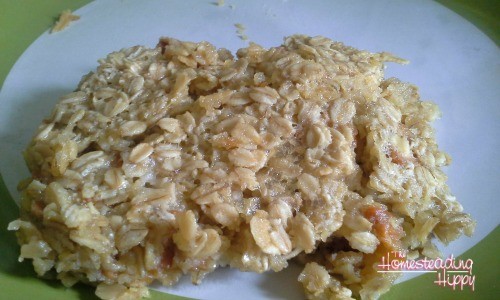
BAKED OATMEAL
Easy to make ahead, and it keeps well on the counter for 48 hours, up to 4 days in the fridge. We make double and triple batches of this on the weekends, and have breakfast for on the go weekdays!
3 cups oats
3/4 brown sugar
1 stick melted butter
2 eggs
2 cups milk (coconut milk is awesome in this!!)
2 tsp baking powder
1 tsp salt
1 cup dried fruit, chopped (optional…we used dried strawberries, blueberries, raisins etc)
Mix all the ingredients together. Pour into a 9×13 greased pan and bake in a 375° oven for 30 minutes.
WAFFLES
You can make ahead this awesome waffle mix for the weekends when you have more time, or you can use the recipe and make some waffles ahead and freeze!
12 cups of whole wheat pastry flour, or a combination of white/wheat
2 Tablespoons of baking powder
2 Tablespoons salt
4 Tablespoons sugar (sucanat, organic cane juice, other dry form of sweetener)
Mix the above ingredients and store in a tightly closed container. I put mine in a gallon sized glass jar on my pantry shelves. Use within 6 weeks.
To use the mix,
2 cups of the premade mix
2 eggs
2 1/2 cups milk (you want a thin batter)
4 Tablespoons melted butter, or coconut oil
Mix the wet ingredients together, and then mix in gently with the dry until just mixed. You will want your batter to be lumpy. Make your waffles and allow to cool thoroughly on a cooling rack. Stack in freezer bags and freeze. To serve again, simply pop them in the toaster or in a preheated oven for a few minutes.
YOGURT PARFAITS AND SMOOTHIES
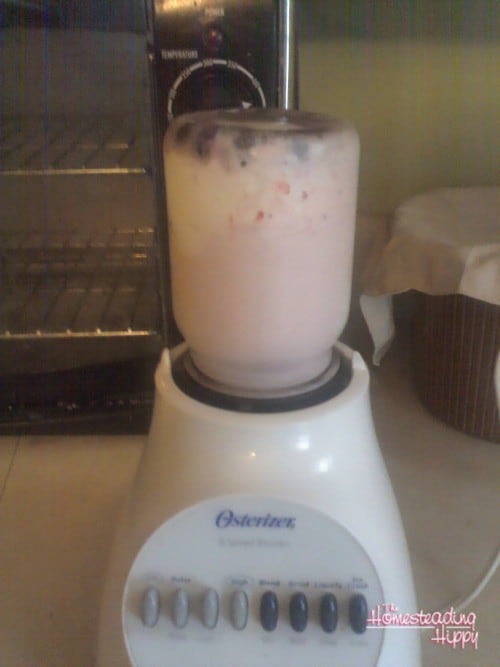
Simply take some pint sized canning jars and add some frozen or fresh fruit at the bottom. Top with yogurt of your choice. I use plain homemade yogurt, and maybe a drizzle of honey on top of that. Store in the fridge for up to 4 days. When ready to serve, top with some delicious homemade granola.
To make into a smoothie, simply use a narrow mouth jar and screw the bottom of your blender blade to the jar and whir on the blender itself!
Need some help getting back into the kitchen and cooking from scratch? Try this delicious collection of easy to make recipes to get you started!
Original article and pictures take thehomesteadinghippy.com site
Growing up, we ate a lot of macaroni and cheese out of the blue box.
It was quick and easy to make, and best of all, cheap. It was even more spectacular when there was hot dogs mixed into the noodle concoction as well! Talk about a childhood dream come true! All during my college years, I knew when my mom had gone grocery shopping for me as there was milk, butter and that blue box of happiness all ready for me to make and eat!
Now that I am the mom and trying to feed my family the best food I can, I have forgone the blue box and make macaroni and cheese from scratch.
Of course, the noodles, the flour in the sauce, the bread crumbs all had gluten. My youngest and I are currently gluten free, so the old recipe wasn’t going to work anymore. It needed a bit of tweaking. After many batches of “ummm, no!” I finally got something that would work. It’s delicious and so easy to make! You just need brown rice noodles, gluten free flour, seasonings, bread crumbs, cheese and milk and you are on your way to the ultimate comfort food!!!
This is one of the easiest meals I make for my family, honestly.
It has become our “go to” when nothing else sounds good to eat. My next move is to master making this in a solar oven, or the WonderOven.
Original article and pictures take thehomesteadinghippy.com site
Cook pasta according to package directions and removing when almost al dente (about 1 minute before what is usually considered done).
Meanwhile, in a small saucepan, heat 4 tablespoons butter, cream, salt, pepper, and thyme. Remove from heat before just before mixture begins to boil.
Use a rolling pin to flatten all the bread slices. Use a butter knife to spread the remaining 4 tablespoons of butter onto one side of each of the bread slices. Press the butter side down into a muffin pan to create bread cups.
When the pasta is done, drain and return to the pan. Stir in the scalded cream and butter along with 1 cup of shredded cheddar. Stir to melt the cheese.
Spoon the cheesy macaroni into the bread cups. Press gently to fill the cups and then top off each one to overflowing. You will probably have some macaroni left over.
Sprinkle the remaining cheese and breadcrumbs over each pasta cup.
Bake for 12 – 15 minutes until the cheese on top is melted.
Prepare fresh veggies.
Serve Mac n Cheese Muffins with a side of veggies.
Original article and pictures take 344apz3bh6di1m0sag1etg3fxyz.wpengine.netdna-cdn.com site
LPS is a Switch for Inflammation in the Gut and Beyond LPS: The Switch for Gut Inflammation
LPS (short for lipopolysaccharide) is a major component of the outer membrane of some bacteria. LPS is a switch for inflammation in the gut and beyond.
LPS (lipopolysaccharide) Drives Inflammation
Made of fats (lipids) and sugar, this compound is both structural and protective to normally benign bacteria. However, when released into the bloodstream, LPS is a potent endotoxin (coming from within) and drives a sudden and acute inflammatory reaction.
LPS has long been used in research to induce inflammatory responses in mammals in order to study them. Many conditions are induced in the laboratory by using LPS, such as Alzheimer’s, MS, IBD, diabetes, cardiovascular disease, Parkinson’s, depression, autism and many other autoimmune diseases.
It is also known that many people with these conditions carry elevated LPS markers.
LPS should not be in the bloodstream at all. However, it has been found that if the lining of the intestine is leaky – that is, the normally tight junctions are compromised – LPS can get into the bloodstream and cause serious damage.
This indicates that leaky gut not only creates inflammation through the food allergy mechanism, but also allows the potent and damaging molecule called LPS into the blood.
A Major Breakthrough in Research
Importantly, elevated LPS in the blood is indicative of not only systemic inflammation, but intestinal permeability as well.
Previously, researchers for brain disorders, for instance, have looked to the brain for answers. Now they have evidence that the intestine is the place to look as the root cause of many disorders and diseases.
For instance, this study published in the Journal of Neuroinflammation showed that injections of LPS into the abdomen of mice stimulated inflammation in the brain, memory loss and increased beta-amyloid in the brain (implicated in Alzheimer’s disease).
LPS is normally found in the gut because it is part of the bacterial membranes. But it should not be in the bloodstream where it can create extraordinary destruction.
Additionally, in this study published in PLoS One found that the Parkinson’s patients has much greater intestinal permeability than controls and that this was correlated with increased LPS in the blood. Additionally, they found that intestinal permeability is an early marker of Parkinson’s disease and that further research may target early diagnosis and therapeutics.
A New Organ called the Microbiome
The most exciting research involves the newly identified organ we have called the microbiome. It’s actually mind boggling on how much research is going on involving this. Universities are scrambling to get studies underway because this research has so much potential to get to the actual cause of so many debilitating diseases.
A recently published study in the journal Cell Host & Microbes, explored the question of whether it is genetics or diet that drives changes to the gut microbiome.
The researchers found that diet was the more important driver of microbiome diversity – not genetics.
Furthermore, when the mice were reverted back to their original diets, the majority of their microbiome reverted back as well, although this did not happen to all the subjects.
Additionally, they found that it took only 3 days to change the community of microbes in the gut and that this was independent of genetics.
The researchers concluded that,
These new results emphasize that, unlike a mammalian genome — which is relatively constant — the microbial genomes that comprise the gut microbiome are relatively plastic… It may someday be possible to design diets that shape the gut microbiome in a way that is therapeutically beneficial. The good news is that the microbial response to a given diet may be similar for many people’s microbial communities, suggesting that we might not need to tailor interventions differently for every single person. (source)
Can We Get Bacteria From Fermented Foods?
It is commonly thought that eating fermented foods will provide trillions of beneficial bacterial cells. However, when you eat fermented foods, the bacteria that is in the fermented foods is not going into your digestive system.
The benefit is from the actual ferment — the breakdown of the nutrients in the food and the nutrients that are produced as a result of the ferment. These bacterial peptides and peptidoglycans can be very healing for the gut and may support the bacteria that are part of your microbiome.
You may have thought that fermented foods provide the beneficial bacteria, but these bacteria die as they travel through the digestive system and just pass through.
Diversity in Gut Bacteria is the Key
The gut is an ecosystem. We need many different strains of bacteria and we need overlap in what they do for us. In this way, if some strains die off (or are killed by outside factors such as medications) you still have other species that can do the same for you.
Instead of trying to kill off the bad bacteria, the best approach is to nourish the microbiome and support it in order to increase diversity. When the microbiome is healthy it will naturally suppress the bad bacteria.
Much like a garden, instead of using weed killer, it is more productive to encourage the good organisms in the yard and soil and these will keep out the pests.
Create the environment that favors the growth of good bacteria. Diet is critical. Sugars, processed foods and grains are pro-inflammatory and the pro-inflammatory state encourages bad bacteria (and cancer and other diseases).
Another important action is to improve the PH by eating plant based foods as well as good animal fats, animal proteins and eating a diverse array of foods. Diverse foods will encourage diversity in the bacteria.
Fermented foods play a huge role here as they give you so many nutrients that are not available through foods. Additionally, get environmental bacteria such as soil based bacteria as these bacteria provide many beneficial functions and nutrients.
Another buzz word these days is resistant starch. Many folks, notably the Drs. Jaminet in their book, The Perfect Health Diet, talk about resistant and safe starches. These include, sweet potatoes, white potatoes, tapioca, root vegetables and white rice.
According to Dr. Permutter in his new book, Brain Maker, some of the foods that will support growth of good colonies of bacteria are, Jerusalem artichoke, jicama, dandelion greens, leeks, onions.
LPS is an indicator of intestinal inflammation. Where there is inflammation, there are pathogenic bacteria. Perhaps the most important takeaway here is that the pathogenic bacteria survive by feeding on the byproducts of inflammation (becoming a vicious cycle), yet the good bacteria survive on fermentation of fiber.
This suggests that you should eat fiber (and possibly resistant starch) to feed the good bacteria. These are all foods I love, especially jicama and leeks!
What do you eat to feed your microbiome? Leave a comment and let me know!
Original article and pictures take realfoodforager.com site
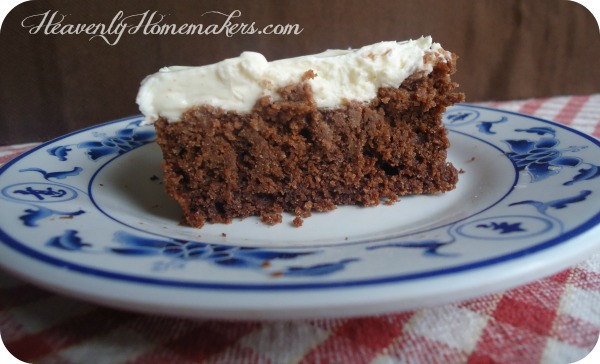
There’s a chocolate cake recipe our family has been making for years. It’s one of our favorite of all cakes – mostly because it’s not dry like many homemade cakes can be.
But – you know how my body won’t let me eat much sugar anymore? I mostly don’t even want it – but sometimes I just get a hankering for something chocolaty. That’s what inspired the invention of Chocolate Whipped Cream, Coconut Fudge Bars – and now this – a Low Sugar Chocolate Cake. I decided to try making our favorite chocolate Texas Sheet Cake recipe with less sugar to see how it would turn out.
You guys!!!!!! Why in the name of a diabetic coma do recipes (including many of mine) call for so much sugar???!?! Originally, this recipe includes 6 cups of sugar. SIX. That’s 2 cups in the cake and 4 cups in the frosting and none of us can possibly imagine that cutting out so much of the sugar would still produce a cake that actually tastes good.
Well neener, neener to all of us. I just recreated this cake to include a grand total of 1/2 cup of sugar. Yes, that is one-half cup. Total.Neener.
I love this cake like nobody’s business. But what do I know? I’m the one who can no longer tolerate much sugar, so even the barely sweet stuff tastes quite sweet to me. The true test was serving this to my children. They still love their sugar (what kid doesn’t?) and they are used the “the regular way” we’ve always made the Texas Sheet Cake. Would they feel like the cake wasn’t sweet enough? I mean, going from 6 cups to just 1/2 cup of sugar – that’s a big drop.
Two things:
Yes, they could tell.
No, they didn’t care.
They ate the cake, they liked the cake, they had seconds on the cake (which was only allowed because of the low sugar content). This makes me think that we could likely drastically cut the sugar in most cake and cookie recipes and everyone would still enjoy the treats. Why yes I will be testing this theory. And I will share my results with you – one recipe at a time.
One thing to note: The brand of stevia you use in the frosting really does make a difference. Some stevia has a stronger, more bitter taste than others. My family prefers NuNaturals Alcohol-Free Stevia. It’s much less bitter. But no matter what brand you use – if you overdo it, the taste goes from sweet to bitter. A little goes a long way – don’t forget! (More info on stevia here.)
In a large mixing bowl, stir together flour, sucanat, salt, and baking soda.
Set aside. In a saucepan, bring oil, water, and cocoa to a boil.
Pour liquid mixture into the bowl with the dry ingredient mixture.
Stir well.
Add sour cream and eggs, mixing well.
Pour batter into a 9x13 inch baking pan.
Bake in a 350° oven for 20-25 minutes or until a toothpick inserted in the middle comes out clean. Allow cake to cool completely before frosting.
Stevia-Sweetened Cream Cheese Frosting
2 cups heavy whipping cream
2 Tablespoons softened butter
8 ounces softened cream cheese
1 teaspoon vanilla extract
Liquid stevia to taste (I use about 20 drops)
In a large bowl, whip cream until soft peaks form. Add softened butter, cream cheese, vanilla, and stevia – whipping until well combined and smooth. Spread over cooled cake. Store in refrigerator. Makes about 20 servings.
Part of what makes this cake so moist is the use of sour cream. It doesn’t hurt that we use an entire cup of coconut oil. Bring on the healthy fat! You can use regular whole wheat flour if you like, but whole wheat pastry flour (ground from soft white wheat berries) really helps make this cake less dense.
So here’s to this amazing Low Sugar Chocolate Cake. Now we can have our cake and eat it too and not even have a sugar crash afterward. Of course, we will also still be eating our veggies with this lovely side of chocolate. Amen and amen.
Have you tried cutting back on sugar in your diet? Have you found recipes to turn out successfully when you cut the sugar?
Original article and pictures take heavenlyhomemakers.com site
Here’s what I used to think about adapting recipes to make them healthier: I thought that if I simply switched white flour for whole wheat, white sugar with sucanat or honey, and vegetable oil with coconut oil or butter – I was healthifying a recipe. So way back in 2008, I did just that. I took my regular recipe for Banana Cake and switched out all the bad for the good and shared the recipe with you here. I even called it “Healthy Treat for Today: Banana Cake.”
I really thought the changes I’d made had created a healthy treat.
In my defense, I suppose the changes I’d made did make the cake healthy-er. Getting rid of empty ingredients and bad fats and replacing them with ingredients our bodies can utilize does make a recipe healthier. But I stop short now of calling a treat healthy if it still has loads of sugar in it.
This goes to show that we always have room to grow and learn, right? Makes me wonder what I’ll write a year from now after I learn more!
In the meantime, I’ve re-healthified what I thought was a healthy cake. Even with this newest version of Banana Cake, I still maintain that it is a treat and that other foods provide more of a nutritional punch than this. Still – with the sugar cut way down and with the ingredients all being foods our bodies recognize and can utilize – do feel free to eat this for breakfast if you like. ;)
2 cups whole wheat flour
⅓ cup sucanat or brown sugar
½ teaspoon sea salt
2 over-ripe bananas, mashed
½ cup milk or buttermilk
1 stick butter, melted
1 teaspoon vanilla
I prefer to make Cream Cheese Frosting with Stevia now so that it has no sugar in it. My boys prefer it if I add just a little bit of maple syrup.
Stevia Sweetened Cream Cheese Frosting
8 ounces softened cream cheese
1 cup heavy whipping cream
1/2 teaspoon vanilla extract
Liquid stevia to taste (I use 2 droppers full)
Whip ingredients together until smooth. Spread over cooled cake. Store in the refrigerator.
Maple Cream Cheese Frosting
8 ounces softened cream cheese
¼ cup softened butter
3-4 Tablespoons real maple syrup
1 teaspoon vanilla extract
With a hand mixer (or in your blender), whip together all ingredients until smooth. Spread over cooled cake.
Share something you’ve learned recently that has changed your mind about what makes a recipe “healthy.”
Original article and pictures take heavenlyhomemakers.com site
Low dose naltrexone (LDN) for autoimmunity is an emerging therapy that is safe and cheap, but many doctors will not prescribe it for this off label use.
If you have an autoimmune disorder, you know that the conventional medical treatments are seriously dangerous. They generally consist of high doses of corticosteroids or biologics. Both of these are powerful immune suppressors that may work, but are dangerous to use for the long term management of a disease.
The key phrase here is management. You want to have something that can help you manage the disease and the inflammation in order to avoid tissue damage and, of course, symptoms.
Obviously, I am a major proponent of using diet and nutrition to help manage any autoimmune disorder.
Grab my Getting Started series of emails that will show you how to start eliminating the proinflammatory foods and replace them with real food.
However, there are times when medications are indicated and if you are having trouble managing your autoimmune disease with just diet and nutrition – it’s time to start searching for a medication that will not harm you.
It’s possible that LDN may fit this bill. It doesn’t work for everyone, but if you are one of the lucky ones it does work for, it can make your life a lot easier.
Even if it helps only 15 or 20%, that may take enough of the edge off, for you to be successful with diet and nutrition as the main management strategy for your autoimmune disorder.
Low Dose Naltrexone (LDN) Affects the Immune System
Low dose naltrexone is derived from a medication called naltrexone that is used at a much higher dose for opiate and heroin addiction. The higher dose of 50 mg works by blocking the reception of opioid hormones. What this means is that you don’t feel any urge to use drugs (or alcohol) but you also do not feel any pleasure because the receptors for this are blocked.
However, Dr. Bihari (NYC in the 1980’s) discovered that a low dose of naltrexone, between 3 mg and 4.5 mg, had beneficial effects on the immune system. He found that when someone uses the low dose at night (at bedtime), the opioid receptors could be temporarily blocked. When this happens, the brain/body reacts by producing more opioids for a limited amount of time with a net increase of opioid production for that day.
More opioids help to damp down an over-active immune response in people with allergies, asthma, and many different autoimmune diseases. We know that people with autoimmunity have low levels of these opiods.
Additionally, white blood cells (the cells that over-react in the case of autoimmunity) have receptors for opioids.
It turns out that LDN promotes the T regulatory cells (Tregs) that moderate an immune response in the body. In other words, LDN supports the Tregs and keeps the immune system in balance.
LDN Affects the Central Nervous System (CNS)
Another mechanism for LDN is that it also reduces inflammation in the central nervous system. This translates into use for conditions such as fibromyalgia, chronic pain and depression. LDN blocks a receptor that’s found on special white blood cells in the CNS called microglia.
The microglia are central nervous system immune cells that produce inflammation, pain sensitivity, fatigue, sleeplessness, mood disorders, and cognitive problems. When the microglia are over-reactive, it results in neuro-toxicity, which results in the various symptoms.
LDN blocks the receptors on those CNS cells and prevents the over-activation of microglial cells, thus making it a treatment modality for these disorders as well as autoimmunity.
So we have two basic mechanisms of actions of LDN – one is balancing and regulating the immune system and the other is reducing central nervous system inflammation. LDN is being studied in several countries for diseases, such as, MS, Crohn’s and others.
LDN is Safe and Cheap
The beauty of naltrexone is that it has been around for many years with a low toxicity/side effect profile even at the higher doses. At the low doses, the side effects are transient and the toxicity very low. It is also extraordinarily cheap, at $25 – $40 a month.
It should be compounded to the low dose, at pharmacies that are familiar with how to do this. It can be compounded as a pill or a cream which makes it useful for children. (It is used for children with autism).
Studies aside, there are numerous testimonials on internet forums of people who have been helped by LDN.
Finding a Doctor Who Will Prescribe LDN
Some doctors have heard about LDN and understand how safe it is, so they are comfortable prescribing it in the low doses for patients with autoimmunity.
If your primary care doctor is hesitant, you need to really own the information about LDN that you can get at lowdosenaltrexone.org and join forums to talk online with folks who have been taking it. If you walk into your doctor’s office armed with research and are confident that you understand how this can help you, it may help the doctor to feel comfortable with prescribing it for you.
To get more information:
lowdosenaltrexone.org – This website is updated periodically and gives you all the information you need to get started with LDN.
Do you already use LDN? How is it working for you? Leave a comment and let me know!
Inspire Your Real Food Healing Journey with my FREE Grain-Free Meals e-Cookbook and Getting Started email series!
Original article and pictures take realfoodforager.com site