Apples and maple syrup combined to magically make Brussels sprouts disappear from the kids’ plates.
It was like an episode of Iron Chef played out in my house. The judges were my kids. And the ingredient challenge: Brussels Spouts. I had to try to get the kids to like them.
I’ve tried lots of times before. And failed. (Not a bad thing, that’s more for me. And I adore Brussels sprouts.)
I prepared Brussels sprouts with all my usual tricks – but failed in the likability category. Here’s my list of tricks that typically work as For-Sure Ways to Get Kids (and Husbands) to Like Veggies:
But it was the slow cooker that worked! And it was all about texture: After just one hour in the Crock Pot, these Slow Cooker Brussels Sprouts with Apples are still firm to bite, but soft enough for kids to chew. They’re also – and this is KEY – not mushy! The cooked down into (familiar!) chunky, sweet apple sauce. At the end, just stir in a bit more sweetness – some maple syrup – and some pecans for crunch. The dish received two-thumbs-up from all four of my little judges. (OK, full-disclosure, one judge gave it only one-thumb-up.)
This recipe for Slow Cooker Brussels Sprouts with Apples is also a perfect side for this time of year because it is:
Frees up oven space to roast and bake
Ready in just 1 hour – so it can be thrown together last minute with just 5 ingredients …while you’re getting ready for a party
Because I’m a dietitian: Helps you bring something healthy to the table!
My kids ate it on a ‘normal’ night as a side for Cornmeal Crusted Fish sticks…before we rushed out the door to Christmas choir practice. So yes, it was a timed challenge, and I won!
Do your kids eat Brussels sprouts? Any other veggies they won’t touch?
Original article and pictures take www.teaspoonofspice.com site
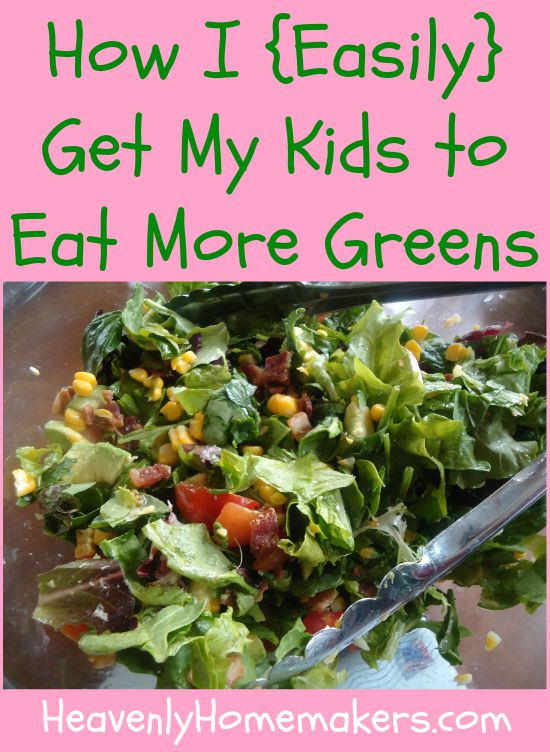
How I easily get my kids to eat more greens. Easily.
This post will obviously be followed by one titled, “How I {Easily} Get My Kids to Eat More Corndogs” since that is also a huge problem most mothers run into. Not to worry. I am here to help.
Man, what is up with kids and veggies? Maybe I’m in the minority, but even with our family putting great choices on the table for almost nine years now, I still see my kids going heavy on the other stuff and skimping on veggies and salads if at all possible. It’s not like they don’t like veggies and greens. I just think for some reason that the main dish is more appealing.
And then there was the night I actually bought corndogs. I know. Sick. But Malachi had earned the privilege of choosing any meal he wanted as a part of our summer reading challenge. He wanted corndogs – the boxed kind. He had read for hours, so I honored his choice and bought some. Beef corndogs, but still. I didn’t read the label because it helps the “food” not be as harmful if you avoid reading the label. Don’t you dare quote me on that because that was sarcastic and we’re really here to talk about eating lots of greens.
I guess the reason I brought up the corndogs was to share that we made the boys eat some peas and raspberries before the freaky corn covered meat on a stick came out of the oven. All of our kids love both peas and raspberries. They ate their obligatory servings – because they had to – then ate their weight in corndogs. I’m glad they enjoyed themselves because that won’t be happening again for quite some time.
Now that you are thoroughly disgusted or perhaps strangely comforted by the fact that I compromised and bought boxed corndogs, let’s get back to talking about the greens. Again, our boys actually like salads, which is why I struggle to understand the following:
When they are making a sandwich for the road, they put like three little pieces of spinach between the thick slices of bread and four pieces of meat and cheese. When they add a salad to their plate at dinnertime, they prefer their pile of greens to be the size of their pinkie toe. Sometimes they spread out the greens just a bit to make the pile look bigger, but I’m onto them. I know a tiny salad when I see one.
How I easily get my kids to eat more greens
Proof that my boys like their greens:
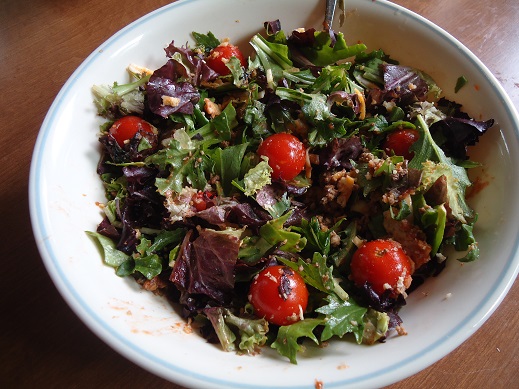
That is a serving bowl, not a cereal bowl. It is chuck full. The contents of said serving bowl were consumed entirely by one person. Our family ate this amount x5 last Friday. I rest my case.
See, when I make a salad as a main dish, adding meats and cheeses, my kids will eat giant bowls full and sometimes go back for more. We go through entire packages of mixed greens in one meal in this way.
The moral of this story is this: I shall be serving salads as meals as often as possible. Bring on the mixed greens and spinach tossed together with taco meat or bacon. This is how everyone wins. We are filled with nourishment, and it is more delicious than a corndog.
Our favorite Main Dish Salads
What are your favorite main dish salads? How does your family do when it comes to eating greens? Last and certainly least, when is the last time you bought a box of corndogs?
Original article and pictures take heavenlyhomemakers.com site
I just had my third baby, and I (finally) had a natural childbirth. Induced and with Pitocin, even. Virtual high-five, anyone??
This was not easy, but I had planned it for a long time. I had horrific experiences with my two prior births. There was the emotional disconnection and fallout of the medicated births, but I also had spinal headaches with both of my sons. Talk about starting your newborn days out wrong! A week-long migraine is NOT the way to go!
I knew going into my daughter’s birth that I wanted it to be different. Even though I have a pretty low pain tolerance (in other words, I’m a big fat wimp) I KNEW that I did not want those headaches, and I wanted to start off on a better foot. I kept telling myself, “As long as I don’t get induced and don’t have Pitocin contractions, I can do it.”
Turns out, I did have Pitocin, but I still did it without any medicine!You can read about my birth story here, but here are some specific things I helped me achieve my goal of a natural childbirth:
The first may seen obvious, but the number one factor was to have a clear, definite picture of WHY I wanted a natural birth. For me, as I said, it was remembering the pain of the spinal headaches! I knew that an epidural was merely a temporary fix in my pain. I kept this idea in the forefront of my head during my pregnancy and then during the actual birth. I knew why I was doing what I was doing, and that an epidural was not the easy way out.
My second great decision was to have a doula. I think you could avoid this if you were very versed in pain management techniques and positioning. For me, however, this was not an area that I felt comfortable with. I wanted a doula less for emotional support and more for practical, hands-on help. She was great. I felt more comfortable just knowing that someone “wise” was in the room. If we were making a decision, we had another voice whom we trusted. She used pressure points to relieve pain and guided me through various positions which I believe greatly expedited the labor.
Staying in shape during pregnancy also helped. My first childbirth, I was SHOCKED at how physically demanding it was. Actual labor, you know? I guess I was a little naive. The third time, I used my favorite workout videos to practice good breathing and stay in shape, and I have no doubt that this was very helpful.
Measured breathing is another. I used deep yoga breathing to relax during contractions. During my former births, I was tense, and this intensified my worry and pain. When I felt a contraction coming, I purposely relaxed my entire body, and breathed very slowly.
Drink, and a little food. I know eating during labor is controversial, and I hoped to avoid it. I have low blood sugar and at one point the nurse smuggled me in some saltine crackers, which I was insanely grateful for. I also used Stephanie’s LaborAid, some smoothie-type drinks, and Emergen-C. Because I burn so many calories, it was important for me to be proactive and have things on-hand that could give me energy.
On a related note, I ate a huge meal the night before. I was induced, so I had the luxury (sort of) of knowing when I would be in labor. I ate a lot (I guess you could say “carbo-loaded”) the night before.
Laboring in my own clothes was another big one. I had planned for my third to have a hospital birth, and when it dawned on me that I didn’t have to wear that yucky, horrible hospital robe, it was such a relief! I bought my own robe and it made me much more comfortable, and confident.
I also appreciated not being hooked up to the IV or having constant monitoring. I allowed them to install a port in my arm, but did not remain hooked up for a constant IV. I got on the monitor every so often to check on my daughter, but not constantly as they did with my other births. It was such a blessing to move around!
Finally, I am grateful for my faith. This is not a trite add-on. I cannot write this post honestly without mentioning my faith, because there was a definite moment (you can read about here) when I knew I could not do this thing on my own strength. We prayed together to ask the Lord for His strength, and He provided.
Disclosure: This post contains affiliate links. When you buy through our links, we earn a small commission, which helps to keep this site going so that we can continue to offer free and useful content, so thanks!
Original article and pictures take keeperofthehome.org site
Looking for a way to make homemaking easier? This wisdom and practical advice may be just what you need!
Note from Ann: Homemaking routines can sound like a topic that’s dull at best, horrid at worst. I so appreciate how Hilary shows us how important they are and boils them down to something easy and achievable. She has me thinking about resolving to get myself back on track in more than a few ways! Enjoy!
For years, I thought I could wing homemaking.
And, for the most part, I did. I accomplished a lot around my home and just went with the flow every day.
The thing was, my laid-back approach ended up stressing me out.
When life got busy and I didn’t have time to focus on my home, things didn’t get done.
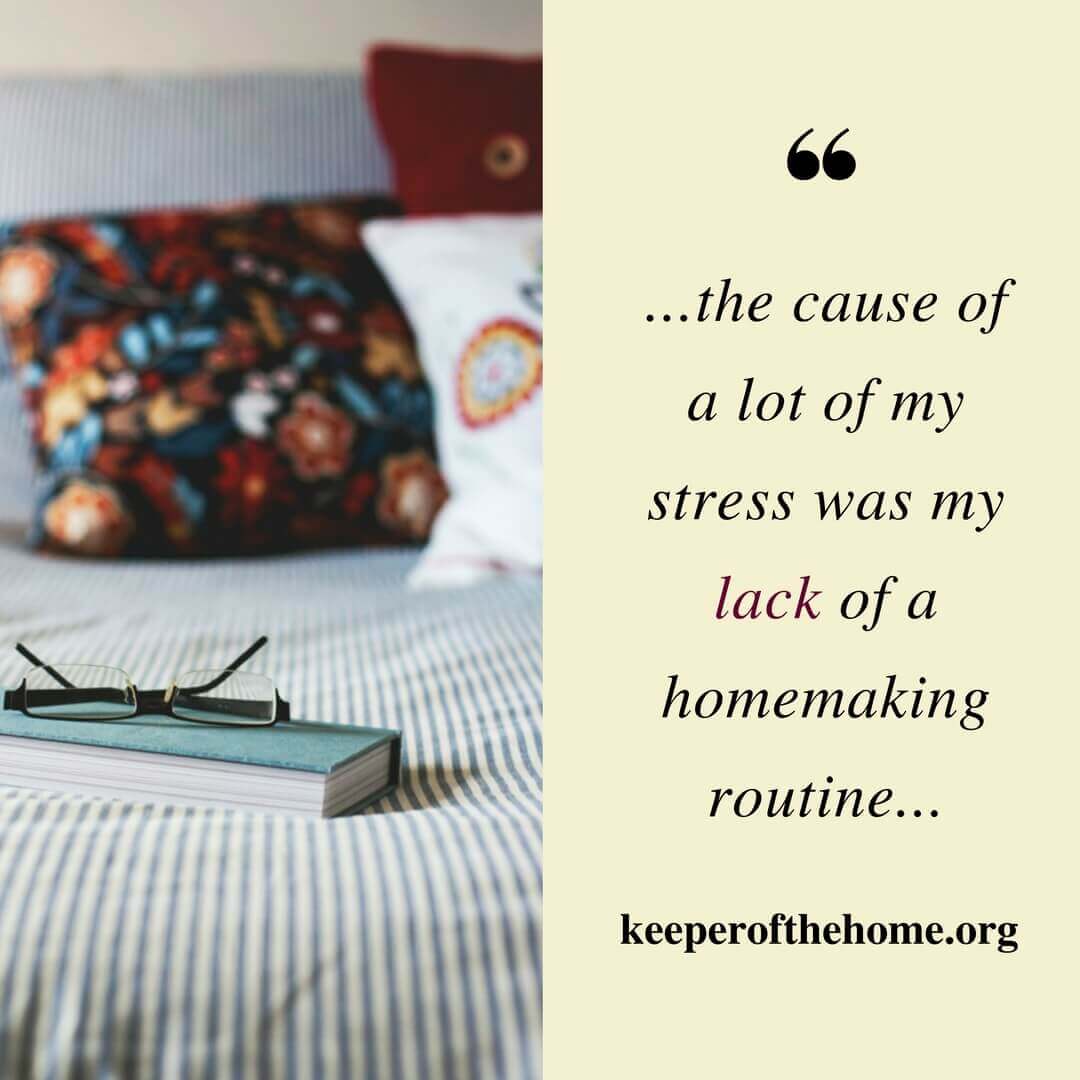
Last year, I finally realized that the cause of a lot of my stress was my lack of a homemaking routine.
Drat.
After thinking that a relaxed approach would make me, well, relaxed, it was disappointing to admit that structure was the solution.
But structure was the solution. And once I embraced it, my homemaking got easier.
Finding non-negotiable chores
Before you think I went from no structure to a fully structured routine, let me explain what has been helpful for me.
To ease myself into a routine, I thought about my non-negotiable daily chores. In my home, I decided I needed to focus on 3:
Make my bed.
Wash dishes after each meal.
Do one load of laundry a day.
That was it. And if I could do those three chores every day, I considered it a successful day.
An added chore
Doing those three chores helped me to concentrate on (and accomplish) the basics in my home each day. And that’s a good thing.
It’s been an easy transition from our school day to the rest of our night, and I’ve been shocked at how easy it’s been to clean up the messes we’ve made in the day. (To be fair, it’s much easier than cleaning up the mess that accumulates after a week … or a month. If anyone knows, I do.)
Cleaning up after yourself each day seems like a no-brainer.
But when you’re tired and if you feel overwhelmed, it can be a challenge. I encourage you to do it anyway.
Blessings from a homemaking routine
By adopting just four necessary chores into my day, I’ve created a loose daily homemaking routine. It works. The rest of my deep cleaning I fit into free time every week or two – usually on a Friday afternoon or Saturday morning. (And usually before company comes over.)
By focusing on those chores, I’m finding unexpected blessings through a homemaking routine. These necessary chores have become an automatic part of my day. I haven’t had to think about when to fit homemaking in my schedule. And I’ve stopped stressing out about my home – or homemaking.
How have you found unexpected blessings through a homemaking routine?
How Gut Bacteria Have Compelled Big Pharma to Pay Attention
The gut microbiome is the focus of tons of research. Find out how gut bacteria have compelled Big Pharma to pay attention.
Several recent studies have highlighted the importance of gut bacteria to the immune system – so much so – that pharmaceutical companies are paying attention and pursuing a different approach to therapies for many serious diseases like autoimmune diseases and cancer.
Bifidobacterium Used in Cancer Research
For instance a recent study published in Science found bidfidobacterium to be associated with antitumor effects. They found that the mice hosting these bacteria had greater T cell infiltration of solid tumors (melanoma).
Importantly, they found that oral administration alone improved tumor control as effectively as use of drugs in the class of PD-1 inhibitors. Additionally, when the drug and the bacteria were taken together the tumor almost completely stopped growing.
The researchers concluded,
Our data suggest that manipulating the microbiota may modulate immunotherapy.
Just a few years ago you wouldn’t catch a scientist talking about gut bacteria, let alone attributing such an important finding to them.
What astonishes me, is that they are investigating common, easy to find (in probiotics or food) species of bacteria – types of bacteria that we have known to years to be beneficial.
Another recent study published in Science, highlighted the role of Bacteroidales in cancer therapy. According to the researchers,
Antibodies targeting CTLA-4 have been successfully used as cancer immunotherapy. We find that the antitumor effects of CTLA-4 blockade depend on distinct Bacteroides species… Fecal microbial transplantation from humans to mice confirmed that treatment of melanoma patients with antibodies against CTLA-4 favored the outgrowth of B. fragilis with anticancer properties. This study reveals a key role for Bacteroidales in the immunostimulatory effects of CTLA-4 blockade.
Clearly, gut bacteria are now studied as key modulators of host immunity, putting them in line for use alongside cancer immunotherapy.
This is actually a fantastic line of investigation and research. Even though Big Pharma is in it for the money – patients will also benefit from the specific and detailed research into which species can help us in various ways.
Giant Corporations Invest in Development of Bacteria Based Drugs
With so many pilot studies and research studies on the microbiome, even food companies are lending financial support to pharmaceutical companies. For instance, Nestle SA, the world’s largest food company has recently invested $65 million in Seres Health Inc., a US company busy developing drugs that enhance the beneficial effects of our gut bacteria (source).
Seres is at final-phase clinical testing of a drug called SER-109 which is designed to prevent the recurrence of Clostridium difficile – a gut infection so virilent, patients are preforming DIY fecal transplants as therapy when antibiotics fail (and they do fail) (source).
Hopefully, this drug will work for those with recurrent C. diff infections. C. diff is commonly passed to others with depressed immunity or spontaneously occur in people on antibiotics and in hospitals (as these drugs kill off the beneficial bacteria and allow the pathogenic C. diff to multiply).
Companies are acknowledging that the microbiome is of vital importance in health and disease. This is something nutritionists and alternative practitioners have been saying for years – cultivating beneficial gut bacteria is the first line of defense against disease in general and autoimmunity and cancer in particular.
How to Nourish and Nurture Gut Bacteria
Start to eat foods that are considered prebiotics. These are foods that have a lot of indigestible fiber – indigestible fiber or resistant starch is what the bacteria feed upon in the colon.
These foods are mainly vegetables – those with the most amounts of fiber are; Jerusalem artichokes, chicory, garlic, onions, leek, shallots, asparagus, beetroot, dandelion greens, fennel, peas, cabbage, nuts, and seeds. Grains also have fiber, but grains are not recommended unless they are organic, properly prepared by soaking, sprouting or fermentation and you know you can tolerate grains in general and gluten in particular.
Start to introduce homemade yogurt,coconut milk yogurt,kefir, kombucha,beet kvass,sauerkraut, and pickles just to name a few. Incorporate these fermented foods into your diet in small portions at first as they pack a powerful amount of bacteria that can set off a Herxheimer reaction, or die-off, if introduced too quickly.
You Can Change Your Microbiome in Just Weeks or A Few Months!
With bacteria having the ability to reproduce every 20 minutes, you CAN change your microbiome in just a matter of weeks or months if you focus on eating bacteria-rich foods.
Cultured foods are a traditional way of preserving food and getting beneficial bacteria into the gut consistently.
As always when starting new foods, start very slowly with small amounts and/or consult your health care provider. See more of my disclaimer here.
If you are as fascinated by the new research on the microbiome and how that affects your health and the health of your family, you may be interested in a diet that supports your microbiome!
Start now.
Start by receiving my Getting Started series to start your real food journey! Get the series here!
How Genetically Modified Food is Destroying Our Health and the Future of Our Children How Genetic Modification is Destroying Our Health and the Future of Our Children
GM foods are an experiment. Here’s how genetically modified food is destryoing our health and the future of our children.
The average American is consuming their body weight equivalent in genetically modified foods each year. This constitutes an experiment on the American population, because there are no long term safety studies.
However there are quite a few studies that show problems and health issues with genetically modified foods.
Genetically Modified Foods Contain a Chemical Soup of Toxicity
Glyphosate is the active ingredient in Roundup. It is a non selective herbicide that was patented in 1964 as a strong metal chelator. That means that it grabs hold of elements, i.e. minerals, and makes them unavailable. It binds up calcium, cobalt, copper, iron, manganese, magnesium, nickel, boron and zinc.
The purpose of glyphosate is to disrupt plant physiology so that they cannot grow and can’t defend themselves against disease. The plants die as a result of the diseases they may acquire — indirectly from the glyphosate.
Glyphosate is systemic. It takes only one drop sprayed on any part of the plant and it goes throughout the entire plant. A minimum of 20% of glyphosate that hits the foliage is exuded through the plant’s root system directly to the soil.
It stays in the soil. Pretty much forever.
Mechanism of Glyphosate
Glyphosate works by inhibiting specific enzymes called cytochrome P450 enzymes. These enzymes play a critical role in the detoxification of xenobiotics. Even a tiny dilution of glyphosate caused DNA damage in epithelial cells.
Xenobiotics are endocrine disruptors and they trigger inflammation.
Glyphosate is Biologically Disruptive to the Environment
There is a ton of science behind the toxicity of glyphosate. Check out a few of these published studies:
In Environmental Toxicology and Chemistry, 2014, Majewski et al, found pesticides in Mississippi air and rain. Glyphosate and it’s degradation product, AMPA were detected in more that 75% air and rain samples in 2007.
In Toxicology, Kruge et al, found the detection of glyphosate residues in animals and humans. These are signs of accumulating glyphosate.
In Biomed Research International, 2014, Mesnage, Defarge, et al, found that major pesticides are more toxic to human cells than their declared active principles.
In Toxicology in Vitro, 2013, Kim, Hong et al, found that mixtures of glyphosate and surfactant TN20 accelerate cell death via mitochondrial damage-induced apoptosis and necrosis.
In Archives of Toxicology, 2012, Koller, et al, found cytotoxic and DNA damage due to glyphosate and Roundup in human buccal cells.
In Chemical Research in Toxicology 2009, Benachour, Seralini et al, found glyphosate formulation induced apoptosis and necrosis in human umbilical embryonic and placental cells.
The AMA is against labeling GM foods. Clearly there is a disconnect between the research and the politics.
The EPA standard for glyphosate in American water supplies is 0.7 ppm. In Europe it is 0.2 ppm. GM corn contains up to 13 ppm.
Seneff and Semsel postulate that interference with the cytochrome P450 enzymes, creates a synergistic disruption,
of the biosynthesis of aromatic amino acids by gut bacteria, as well as impairment in serum sulfate transport. Consequences are most of the diseases and conditions associated with a Western diet, which include gastrointestinal disorders, obesity, diabetes, heart disease, depression, autism, infertility, cancer and Alzheimer’s disease.
In total, glyphosate is the worst thing that has ever happened to the earth and Monsanto and the law makers who are in their pocket completely deny these problems.
Toxins in Our Waterways
According to Ken Cook, president of the Environmental Working Group, The Food and Drug Administration doesn’t regulate the environmental spread of pharmaceuticals. And the toxic substances law ignores their presence in waterways.
Deborah Swackhamer, a professor of environmental health sciences at the University of Minnesota, investigated the chemistry of the nearby Zumbro River. She found traces of pesticides in the water. She also found prescription drugs ranging from antibiotics to the anti–convulsive carbamazepine.
According to the EPA there are over 1 billion pounds of pesticides applied to US soils and plants annually. Of these, 60% are known endocrine disruptors.
What to do
Memorize the Dirty dozen listed at the Environmental Working Group and avoid this produce unless it is organic.
Accumulation of chemicals in the adipose tissue
Toxins from these chemicals accumulate in fat tissues. Each person has their own level of toxicity and their own ability to detoxify these chemicals due to the other factors such as:
Endocrine toxins
Psychosocial factors
Environmental toxins – chemical toxins and heavy metals
Hormonal imbalances or deficiencies
Infectious agents
Allergies and sensitivities
Nutritional deficiencies
Genetic predisposition
How to Support Detoxification
Foods
Deeply colored foods have polyphenols which aid in detoxification. In addition, the cabbage family, garlic and onions provide sulfates which also aid in detoxification (phase 1 detoxification).
In Phase 2 detoxification there are 6 conjugation pathways. These include, glutathione conjugation, amino acid conjugation, methylation, sulfation, acetylation and glucuronidation.
Dr. Terry Wahls, in her book The Wahls Protocol, advices people following her diet to eat 9 – 12 cups of assorted vegetables a day in order to provide minerals, polyphenols and anti-oxidants. Dr. Wahls cured herself from MS via diet and now she is conducting research to prove the diet works! You go girl!
Supplements
While we make glutathione in our bodies (the most powerful detoxifier), sometimes we don’t make enough or it is broken down too quickly. S-Acetyl-glutatione is the best glutathione supplement for supporting detoxification. Liposomal glutathione is also better absorbed.
How a Cleanse Improved My Life (and Helped Me Lose 15 Pounds!)
Cleansing has become an important part of my daily routine. I have more energy, sleep better, think faster, and forget less, to name a few of the benefits.
I’ve also lost 15 pounds so far! As much as I’ve been trying to lose weight for the last three years, though, the weight loss is just the added bonus.
The best part is how good I feel now!
I’m finally able to remember where I put my to-do list and my glasses.
I’m remembering to eat!
I’m remembering what I promised my kids I’d do when I dropped them off at school in the morning.
Walking feels great and I’m walking three times as long and faster!
The constipation, gas and bloating have gone bye-bye for good.
My eyes no longer feel heavy or tired.
I still have energy after dinner!
I get to sleep faster and my sleep is so much more sound and restful.
Cleansing is just one part of good gut health, and I’ve spent hundreds of dollars researching and learning more about it.
Wish I’d had the resources in this year’s Ultimate Healthy Living Bundle…which have been helping me now (and can help you too!).
My story
I’ve been on a three-year struggle with weight. I’ve been angry and depressed.
Why was my body holding weight when I was eating healthy, staying super active, and maintaining a great regular exercise routine?
Was I just old?
Was I seriously sick?
Was I going crazy?
No, really: the advice was constantly to eat less and exercise more, to fast, or to get on this diet or that special menu.
In the midst of this, I FELT crazy: brain fog, sluggish, in bed at 8:00 each night.
I read article after article and spent countless money on lab tests at the doctor and on meds and supplements like armour thyroid.
I felt like no one was listening and nothing was happening.
And then, someone listened.
Earlier this year I began working with a nutritionist who…LISTENED!!!
We worked out a solution that I had suspected…
My body wasn’t letting go. You know, letting GO.
Did you know you can hold up to 25 pounds of gunk in your intestines? It’s like plaque in your arteries, clogging the path.
It prevents your body from absorbing the nutrients you need and keeps it from ridding itself of harmful toxins. And then your body can’t function properly.
Which means you don’t feel good.
The answer for me was cleansing. I wasn’t going to get help without it.
If you are ready to start a cleanse, start easy.
There’s a lot to learn and one of the best things that may help you is to watch something like the Heal Your Gut Summit, with Dr. Eric Z, which is included in this year’s Ultimate Healthy Living Bundle. Outside of the bundle it costs $97 and it is WOW!
If you feel you need to dive deeper, don’t do it alone! Find a health practitioner who can guide you for a safe cleanse and stay with you throughout the process.
If you are slightly sluggish or just want to be at your best, start with these easy daily habits I use to detox everyday:
If you are thinking you need a serious, go-all-out cleanse, I highly recommend doing so under the care of a nutritionist or other health care professional who you know and trust, who LISTENS to you.
There have been times when I wanted to give up and times when I was concerned that I felt I was giving birth to my intestines! My nutritionist has been there to hold my hand and make appropriate adjustments as needed.
As I mentioned before, this year’s Ultimate Healthy Living Bundle is FULL of resources to help you learn and appreciate how to prioritize your gut health. You can learn about gut health and make your life better…so if you haven’t already, be sure to check out the bundle’s Alternative Health section (and the MANY other eBooks and eCourses included!).
Serious cleansing can be a serious matter. More and more we are learning just how important our gut health is.
If you are having trouble with any of the following, you may need a fresh start by cleansing and detoxing:
Focus/attention
Mood swings
Anxiety
Depression
Weight gain
Inflammation
Memory loss
For example, this powder is what I use. I know, it’s gross. The first time I drank it I gagged too, but I didn’t give up. I figured out the right consistency of powder and water and add the juice of half a lemon.
Now I can easily chug it! Check with your healthcare provider to see what they recommend if you think you need a colon cleanse.
What I’ve learned is that the body’s first line of defense is a healthy colon, but our internal detoxification process can break down not just from a poor diet, but also from:
Overexposure to environmental pollutants in our air
Food and water
Lack of adequate fiber
Excessive alcohol and caffeine
High stress
Lack of exercise
Overuse of antibiotics
All too common prescription medications.
In this case, a state of toxicity overtakes the body. A colon cleanse then becomes one of the most important steps in detoxification.
Cleansing has become an important part of my daily routine. I have more energy, sleep better, think faster, and forget less, to name a few of the benefits. Losing weight has become the icing on the cake, second to how good I feel!
If you are ready to start a cleanse, I recommend starting easy. If you feel you need to dive deeper, don’t do it alone! Find a health practitioner who can guide you for a safe cleanse and stay with you throughout the process.
In fact, that’s just what I’ve found in this year’s Ultimate Healthy Living Bundle. If you have to start with one thing, I recommend the Heal Your Gut Summit, with Dr. Eric Z, which retails for $97 and is available for a few more days for UNDER $30 (with lots of other great resources too).
How do you detox and cleanse your system?
Disclosure: This post includes affiliate links. Thank you for supporting our work and mission!
Disclaimer: Although all Keeper of the Home contributors are passionate about nutrition, natural living and alternative health issues, we are not certified nutritionists, medical doctors, or practitioners of any kind. We are not licensed to counsel anyone in medical matters, nor may we be held responsible for any course of action that you choose in regards to your own health or that of your family. Please remember that what we are sharing is the result of our own experiences and years of study, but may not necessarily be the right course of action for you. We are advocates of becoming informed, knowledgeable and responsible for one’s own health, but our desire is not to be an authority on any matters of health for you, nor would we presume to have sufficient knowledge to do so. Our hope is that what we share may encourage you and start you on the road to doing your own research, and seeking out the opinions of professionals or others that you trust
Original article and pictures take keeperofthehome.org site