Here are some of my favorite seasonal Thanksgiving Holiday recipes and some new ones that use real food ingredients and many appropriate for SCD and GAPS!
When you are following a special diet, the holidays are the hardest time. It is critical to have your special foods on hand that you can enjoy along with everyone else and it is not difficult to make this meal according to special diets.
Here is a fantastic collection of holiday recipes!
Say goodbye to overwhelm and start thriving as a homemaker!
More Than Just Making It tells the story of Erin and her family’s financial breaking point, as well as the triumph of their comeback. It took hard work, creativity, and faith in God’s provision to reset their bank account as well as their hearts, but ultimately they found a new way to thrive and freedom from financial anxiety. You can do the same!
With your purchase of More Than Just Making It, you will also receive access to exclusive printables and resources!
Original article and pictures take thehumbledhomemaker.com site
Saving Money (and Sanity) by Stocking Up Before a Baby
I’m 30 weeks pregnant and more than a little panicked. The nursery isn’t set up. We don’t have a stroller. And, although we have all the bedding, blankets and burp cloths we used with our first daughter, it’s still packed away in the garage.
I could tell you how much time we’ve spent this year trying to sell our house, or demand that you cut me some slack after hearing about our plumbing disasters. But the truth is, I’m not really known for getting things done early.
Making lists and plans? Yes. I can do that. But actually working in advance and entering situations feeling peaceful and prepared? Not so much.
My only consolation at this point is a cabinet full of toilet paper and toothpaste.
I’m not really a couponer. Or a grocery shopping expert. I don’t have the space to be a hoarder (though don’t ask me how long it took to completely declutter my house earlier this year). But when I’m pregnant, I stock up on staples and paper goods like they’re going out of style (especially if they’re on sale).
When I was pregnant with my first baby, my cousin told me that she prepared by buying a pack of diapers every time she went to the grocery store. I thought that was brilliant, until my mom pointed out that I’d been seriously sensitive as a baby and perhaps my own child might not react well to certain brands or chemicals.
Fine. Maybe buying diapers, wipes, and other baby STUFF wasn’t the best option for me, but surely I could do something!
That’s why I decided to stock up on the everyday items we seem to run out of most often, the ones we can’t really live without and would force me out of my house no matter how much I dreaded facing the grocery store in my postpartum state.
The best part about stocking up early (aside from letting me off the emergency grocery hook) is that while filling my cabinet shelves with toilet paper, toothpaste, and tissues would cost quite a lot if I did it all at once, doing it over time doesn’t hurt my weekly budget and can actually save me money.
It doesn’t cost a whole lot to grab an extra package of this or that on each of my regular trips to the grocery store now, especially if I take a few minutes to check the sale papers and compare it to my “Buy Before Baby” list. Stocking up before our baby arrives will save me time, money and sanity — all rare commodities, if I remember those newborn days right!
Here’s what I’ve got in my pantry (or on my list):
toilet paper
paper towels
napkins
storage bags
paper plates
aluminum foil
plastic wrap
toothpaste
soap
shampoo
deodorant
laundry detergent
fabric softener
contact solution
cleaning supplies
dishwasher detergent
tissues
pet food and other pet supplies
If I’m really successful in stocking my pantry, I might even add extra jars of peanut butter, boxes of granola bars, bags of sugar, light bulbs, and batteries to my pre-baby grocery trips, too.
How do you prepare for a new baby or other big change in your family?
Mary Carver is a writer, believer, wife, mom and recovering perfectionist. She writes about her imperfect life with humor and honesty, encouraging women to give up on perfect and get on with life at Giving up On Perfect. Get a free ebook about romance and real life when you subscribe to her blog.
Do you want to take better control of your grocery budget? If so, you’ll want to read my newest eBook, 5 Days to a Better Grocery Budget!
This eBook will give you all the tips, tricks, and practical advice you need to create a grocery budget tailored to your family’s needs that you can actually STICK to (because that’s the key!)
In this eBook, you’ll learn:
How to create a grocery budget that fits your family’s needs and your finances!
New systems to help you keep track of what you spend at the store!
How to actually stick with your new budget and save money for years to come!
Ways to save up to $50 off your grocery bill THIS WEEK by using the 10 simple strategies outlined in this eBook!
Read to get started? Just use the form below to sign up!
Original article and pictures take moneysavingmom.com site
Every so often, we have eggs for dinner. They are easy to make, cheap, and quite abundant for us this time of year, as a dozen eggs is just as close as our backyard. Having said that, I don’t like to make just scrambled or fried eggs all the time. I like to try and mix it up once in a while. Here’s my recipe for what we had last week, a sausage frittata. It’s loaded with potatoes, cheese, sausage (we used chicken) and eggs to make a hearty meal any time of day!
SAUSAGE FRITTATA
Original article and pictures take thehomesteadinghippy.com site
Sample 5 Home Fitness Workouts Through Fit2B Mobile
Get 5 Home Fitness Routines for 5 Days Free!
If you want to try 5 of our most basic home fitness routines through our web app, just click here to learn more about this awesome offer! Our members have been using the full version of Fit2B Mobile since it’s launch in early January 2016, and they’re loving the accountability, games, points, bonus videos, educational material, and more! Just take a peek and get all the details. No obligations. No credit card needed. Just try it.
We’re hoping that this gets a lot of people “off the fence” so there is an additional discount code for those who might want to join Fit2B at the end of the 5-day course.
Wait… Have a friend that hasn’t heard of Fit2B and our mission to change lives one tummy at a time? Share this so they can experience Fit2B too!
At the beginning of 2016 we migrated to a completely new platform and launched Fit2B Mobile {if you’re already a member, sign up for that here}. Fit2B can now offer a quality of service that far surpasses many other online home fitness providers, our prices are on the lower end of comparable providers because we’re all frugal here and we want everyone to be able to benefit from Fit2B.
Education. Family-friendly fitness. Accountability. Mobile experience. Supportive forum. Not to mention a founder and instructor {me} who cares deeply about my message and ministry and YOU which is why there will be close to 200 tummysafe routines by the end of 2016 so that no one with core damage has a reason NOT to start moving.
I hope you see how hard we have worked for 6 years now for our clients and the value we provide them as we educate them and their families about the true function of their core – not just during our workouts but during their daily life – so they can be stronger for their family, communities and our world.
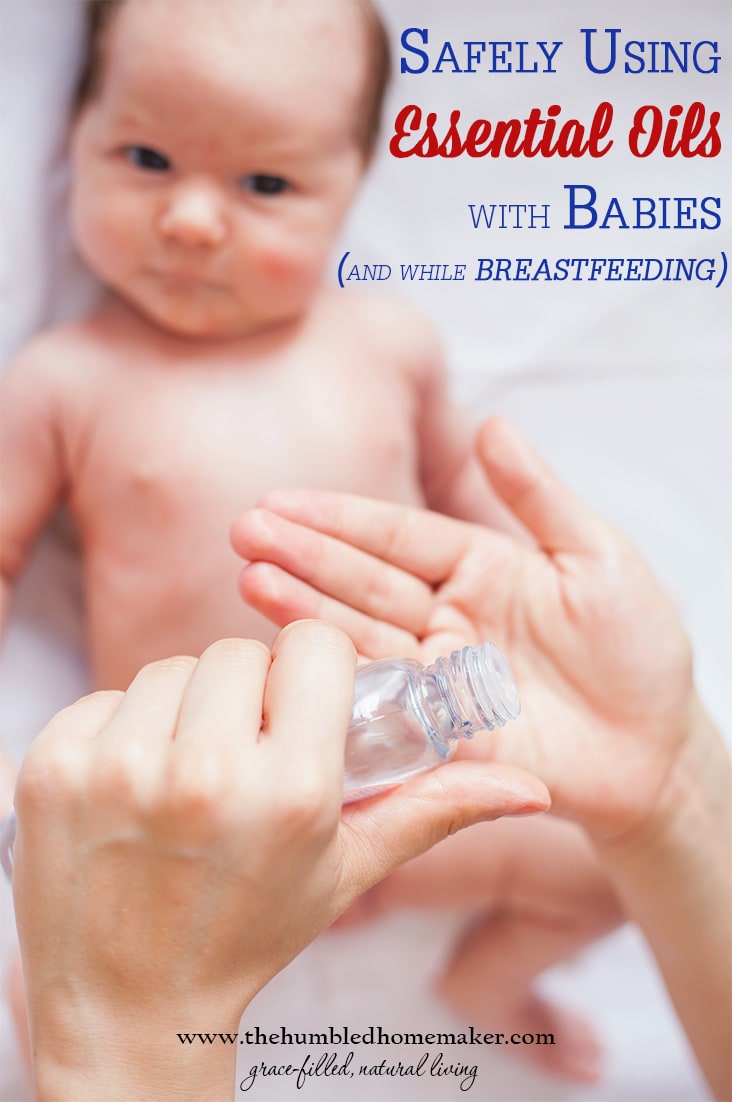
Safely Using Essential Oils with Babies and While Breastfeeding
Using essential oils with babies and while breastfeeding can be tricky. We interviewed a certified aromatherapist to get the inside scoop on how to do it safely!
Using essential oils with babies and while breastfeeding can be tricky. We interviewed a certified aromatherapist to get the inside scoop on how to do it safely!
By Will Odom, Contributing Writer (and Erin’s hubby!)
In our home, we have been avid users of essential oils for several years. However, we didn’t feel educated about them enough to use them very frequently around our girls when they were babies.
With the arrival of our newest bouncing baby boy, I began doing some research on safely using essential oils with babies and while breastfeeding.
Baby Boy’s going home from the hospital outfit.
I read several articles and kept find conflicting information on what was safe and what was not.
I later discovered the reason for this is that, within the aromatherapy community, even among the experts, there are varying opinions on using essential oils with babies and while breastfeeding.
For example, certified aromatherapist Robert Tisserand, in his book Essential Oil Safety, states that there are oils that can safely be used with babies, and he gives a dilution recommendation for all age ranges.
However, Andrea Butje, the founder and owner of Aromahead Institute, teaches that essential oils shouldn’t really be used at all topcially on children under the age of 5; though, she does topically use hydrosols on infants and children under 5. She also suggests diffusing a limited number of oils.
With all this information, I decided to turn to my friends at Plant Therapy.
I sent their certified aromatherapists (usually certified through Aromahead) a list of very specific questions.
They answered my questions more thoroughly than I expected, and I was very impressed with their commitment to educate and find a safe balance to using essential oils with babies and children.
Since I am so excited about their responses, I want to share what I learned from them about using essential oils with babies and while pregnant or breastfeeding.
Safely Using Essential Oils With Babies and While Breastfeeding
Plant Therapy is also offering my readers an exclusive 10% off right now!Use the code HumbledHomemaker10 for 10% off your entire purchase. (This excludes gift certificates. Coupon cannot be combined with any other discount or offer.)
My questions and their answers follow:
1. What are some common oils that you can use topically with babies?
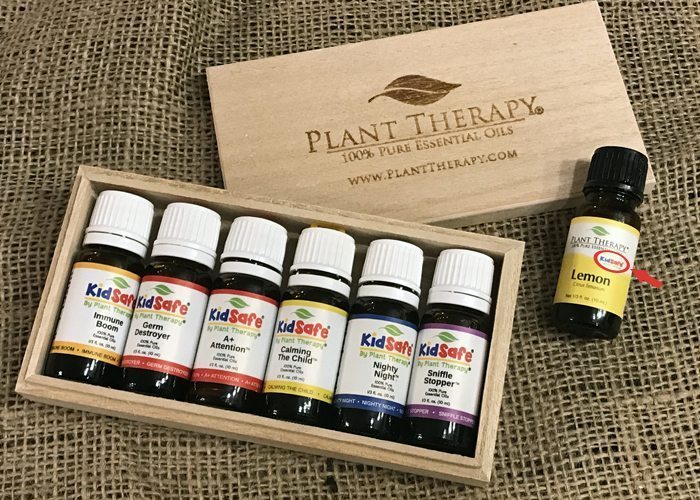
Plant Therapy has a line of completely Kid Safe oils, and all other oils that are safe for children are marked with a Kid Safe seal (red arrow).
KidSafe oils were specifically designed for common concerns in children ages 2-10. We make it easy to recognize KidSafe oils by adding a KidSafe stamp to the label if the oil has met Plant Therapy’s strict guidelines of being the safest oil to use with children.
Personal Note: We love the KidSafe oils in our home and use them almost daily, and there are several reasons why:
If there is any question about an oil, Plant Therapy will not put it on their KidSafe list.
These oils are specially formulated to contain essential oils that are gentle, yet effective for children. They aren’t just diluted versions of the adult versions.
All the KidSafe oils are 100% pure, free from any additives, adulterants or dilutions. They are of the absolute highest quality.
With the exception of Nighty Night, the KidSafe synergies are considered safe for use during the 2nd and 3rd trimesters of pregnancy.
However, all of our KidSafe oils can be used with babies as long as they are used correctly and with extra precautions.
For topical use with infants, we normally recommend a mother dilute the oils (1-2%) and apply them topically on herself.
You can use KidSafe oils topically on a baby when diluted to 0.1-0.5% (which would be 1-4 drops of essential oil in 30 ml of carrier).
Besides our KidSafe synergies which were formulated specifically for common concerns in children, some common single oils include Lavender (very calming and great for the skin) and Roman Chamomile (also very gentle and calming).
Another great option is hydrosols. Hydrosols often have the same therapeutic benefits of the essential oil but are much more mild and gentle. This is what makes them a great option for babies!
If you wish to use a lotion on a newborn, then it is advisable to purchase an unscented base like Evening Primrose Body Cream, Sunflower Body Cream, or Olive Lotion and do a 0.25% or 0.5% dilution of your favorite Kid Safe oil or synergy like Calming the Child(i.e. 2-3 drops of oil in 4 tsp of carrier is 0.5% or 1-2 drops of oil in 4 tsp of carrier is 0.25%).
* Plant Therapy recently added a Dilution Chart Magnet to their website. It is free with any purchase over $10 (just add it to your cart, and it will be free), or you can buy it for $.99. It’s a very convenient chart done in tablespoons making it easier to read, and since it is a magnet, it is also convenient to have on your fridge.
2. What are some common oils that you can diffuse with babies?
For diffusing with a small baby in the home, we recommend only using KidSafe oils and only diffusing for 30 minutes 1-2 times per day.
One great option is to diffuse for 30 minutes before bed in the baby’s bedroom and then shut the diffuser off when you put the baby to sleep.
The time of diffusion can increase as your baby gets older. For children 2+, we recommend diffusing no more than 30 minutes on and 60 minutes off if diffusing all day.
Hydrosols don’t typically work well when diffusing because they are so gentle and less potent.
3. What are some oils or blends that address common issues with babies?
Lavender and Roman Chamomile are both great oils for soothing all types of discomfort from tummy troubles to calming.
Tummy: Roman Chamomile 1 drop in 10 ml of carrier oil applied topically to baby’s abdomen.
Calming: Lavender diffused or diluted to 1-2% and applied on the mother.
Teething:Roman Chamomile hydrosol on a soft cloth and rubbed gently on the gums. You can also dilute Roman Chamomile essential oil to 0.1-0.5% and rub on the outside of the jaw.
We also have our 21 KidSafe synergies that were formulated to address common concerns in children such as:
There are so many oils that can be safely used and that can and do address many common issues with babies.
Just remember to only use essential oils when needed. In some cases, this might be daily for a couple of weeks, in other cases it might be 1-2 times a week or less.
Using essential oils with babies and while breastfeeding can be safe
4. Are there any oils that mom shouldn’t use if she’s breastfeeding?
Yes, there are.
Robert Tisserand has a list of oils that should be avoided by all routes when pregnant and/or breastfeeding.
Some of the common oils that are listed include:
We also recommend these essential oils be restricted during pregnancy or breastfeeding:
* There are experts that say Peppermint will decrease your milk supply (this would include Peppermint Tea and Peppermint Essential Oil); however, there isn’t much research or proof on this. In the past, Plant Therapy said it was safe; however, a few experts reached out and disagreed. As such, Plant Therapy decided it is always better to be on the safer side.
A complete list of oils to restrict or avoid by all routes can be found in Essential Oil Safety by Tisserand and Young.
Plant Therapy knows this can all be overwhelming and confusing which is why we created a chart that lists oils that ARE safe to use while pregnant or breastfeeding.
Essential Oil Pregnancy and Nursing Safe Chart
5. Are there any oils that could help mom with breastfeeding?
Unfortunately, essential oils are not known to increase milk production.
However, there are oils that can reduce the worry and overwhelming feelings that can come when breastfeeding.
Like mentioned above, you could diffuse any of these oils in your baby’s room for 30 minutes before bedtime and then shut the diffuser off when you put the baby to sleep.
If you prefer not to diffuse in the same room as your baby, you can also add a couple drops to a cotton pad and place it next to your bed.
This is a great way for the mother and father to receive the amazing calming effects of these oils without the baby needing them.
7. What are any oils that absolutely should NOT be used around babies?
Because of this, it is recommended that oils high in these constituents such as Eucalyptus, Rosemary and Peppermint not be used around babies or young children.
If there is ANY extra precaution like simply not knowing enough about an oil, we will not mark it as KidSafe. If we don’t have the research to back up that it is safe to use around children, it will not be marked as KidSafe.
Personal note: We recently gave our girls the Lil’ Stinkers Aroma Plush Animals, and they absolutely love them. One of them even made an appearance at preschool share day. We add a couple of drops of Lavender to the pad inside each animal at night, and they snuggle up for a good night’s sleep.
Using essential oils with babies and kids
8. Are there oils that can be used at certain stages…like 0-3 months, 3-6 months, etc.?
Not really.
There are extra precautions when using oils around newborns because the risk is greater as their skin does not start to mature until around 3 months of age.
9. Are there any oils that can help with postpartum depression?
For postpartum depression, I would actually reach for citrus oils since they are very uplifting.
Rose would also be a good one since it is known for it’s calming qualities that help to soothe emotions and bring peace.
Plant Therapy’s blend Blues Buster is formulated to increase your positive thoughts and emotions.
Worry Free (with some precautions) is also another oil that could help momma deal with stress.
Worry Free contains Ylang Ylang, and it is not considered KidSafe because it is a possible skin irritant.
Diffusion would be fine around younger children (as long as the diffusion recommendations for a newborn are followed)
Topical (for the mother) would be fine too as long as it isn’t applied some place that will be in direct contact with the baby’s skin.
Other possibilities that could help include:
Are there any oils that can help with hormonal balance?
As for balancing hormones, Plant Therapy has a synergy called Balance that could be helpful.
Clary Sage is also a great oil to help balance hormones.
The Just for Women Roll-on Set contains some great oils to help with mental, physical, and hormonal balance.
10. How important is dilution?
Very important.
The most common adverse reaction that comes from using essential oils is a skin reaction that is most often related to the use of undiluted oils topically.
Robert Tisserand said, “I have recently changed my stance on this after seeing the number of people experiencing adverse reactions to essential oils that are not high risk, such as frankincense, helichrysum, and lavender.
“I am also incredulous to find that people are using undiluted oils on their face in order to improve their complexion. This is a really bad idea! Using undiluted essential oils will dry your skin as well as increase the risk of allergic reaction.
“But the real kicker is – you don’t need to do it.
“Even for the extreme situation of healing infected wounds, 5 or 10% dilution is usually enough. If you want a cosmetic effect 1% is a safe and effective guideline.”
Less is more when it comes to using essential oils with babies and children. Not only is it safer, it is effective AND will save you money!
Plant Therapy is also offering my readers an exclusive 10% off right now! Use the code HumbledHomemaker10 for 10% off your entire purchase. (This excludes gift certificates. Coupon cannot be combined with any other discount or offer.)
Do you want to learn more (much more!) about using essential oils and herbs in your home? The Herbs and Essential Oils Super Bundle is available for 6 days only! It includes $800 worth of handpicked resources for a whopping 96% off! Learn all about the bundle and see what’s included HERE.
But hurry! The sale expires on May 22nd!
Master Natural Remedies eCourse & eBooks
Have you used essential oils around a baby or while breastfeeding? What was your experience?
Unsure how to feed your infant? Check out these safe and simple tips.
When I became a new mom, the first year of my baby’s life was filled with joy and so much uncertainty. I didn’t know what to do with babies – and I knew I didn’t know.
Childbirth and breastfeeding certainly were uncharted territories – but so was everything else, including basic developmental stages, diapering, sleep patterns, teething, and introducing first foods.
For quite a while I just wished I could exclusively stick to breastfeeding because I had figured out what I was doing. At that time, it was easy and comfortable.
But my son was ready to start solid foods and I knew it. He stared longingly each forkful of food my husband and I would savor. He studied our mouths as he tried to figure out what we were doing.
Finally it was time to introduce him to foods. But what could a baby eat?
Safe and Simple Ways to Feed Your Infant {Accidentally Green}
What does a baby need?
After walking past store shelves of baby food for all of my life and seeing images of the Gerber baby, I was convinced that babies eat commercially-prepared baby food. Yet intuitively, it just didn’t seem right.
I remembered baby shower games when I had to look and smell baby food jars and try to guess what was inside. That didn’t seem right.
Since a baby is a human – and since I was training my child from birth to develop into a healthy adult – why shouldn’t he know what real food was? Why did I have to serve a blob of banana baby food when I could serve an actual banana?
So I chose to not buy commercial baby food.
And that’s when I made a valuable discovery – babies don’t need special baby food in a jar. Babies need real food.
Not only is this a simple approach for parents, but it’s safe, too, because you’re able to start your children on a healthy approach to eating.
Developing a love for real food
After briefly introducing my son to infant rice cereal and oatmeal, I switched him completely to real foods. I pureed fruits and vegetables according to an age-appropriate timetable – and he loved it. That boy loved to eat. He loved to try new foods – except squash. And he slowly progressed to teensy bits of meats, dairy, and grains.
His first foods were actual vegetables, and to this day, his favorite foods are vegetables.
They won’t be confused why real green beans have a texture that’s so different from goopy green beans. And they’ll develop a love for the taste of real peaches instead of some sugary peach concoction in a jar.
Need some guidance?
To help other families along the process, I’ve written about my experiences and research in the eBook First Bites. Just in case you’d like a little help figuring things out, feel free to download your own copy of the real food timetable I used.
How have you tried to safely and simply feed your infant?
Original article and pictures take accidentallygreen.com site